When customers ask us for “a corrugated box,” the first question we clarify is not the print—it’s the box style. Corrugated box styles determine how the carton carries load, how fast your team packs, how the box behaves in parcel delivery, and how consistently suppliers can reproduce it.
In this news guide, I’ll do two things in a buyer-friendly way:
- Show you the most commonly used corrugated box styles (the ones that solve 80% of real shipping needs)
- Provide a complete style list grouped by family, so you can communicate clearly in RFQs and avoid misquotes
Quick Match Table: Choose the Right Corrugated Box Style by Use Case
Start here if you want a fast, practical decision.
| Your Use Case | Best-Fit Corrugated Box Style | Why It Works | Common Add-Ons |
|---|---|---|---|
| General shipping cartons (most products) | RSC (Regular Slotted Container) | Best cost-to-performance, easy sourcing, fast packing | Print marks, barcode zone, tape pattern |
| Heavy items / stacking pressure | FOL (Full Overlap) or Telescope | Extra panel strength where cartons fail first | Double wall board, corner protection, straps |
| DTC / subscription / branded parcels | Die-cut mailer (self-locking) | Better fit + clean unboxing + faster assembly | Tear strip, locking tabs, inside print |
| Fragile goods (movement risk) | RSC + partitions/inserts or Die-cut with retention | Controls movement and impact damage | Dividers, molded inserts, cushioning |
| Long or flat products | One-piece folder / Five-panel folder | Wrap-around protection for non-box shapes | Edge guards, tape pattern |
| Warehouse picking / display-ready | Tray (HSC) + lid/overwrap | Open-top access and faster pick-pack | Lid, sleeves, corner locks |
| Multi-SKU kits (components) | Die-cut + multi-cavity or RSC + divider system | Keeps parts organized; reduces missing items | Partitions, labeling, foam/pulp insert |
| Variable-height packs | Multi-depth (scored height) cartons | One carton covers multiple fill heights | Score lines, fold guides |
The 12 Corrugated Box Styles Buyers Use Most
Below are the high-frequency styles we see in real procurement. For each one, I’ll give you: what it is, when it wins, what to watch, and what we can customize.
1) RSC (Regular Slotted Container)
What it is: The standard shipping carton with flaps meeting at the center.
Best for: Most general shipping, pallet freight, and export cartons where cost and scalability matter.
Trade-offs: Not the tightest fit for premium unboxing; relies on tape for closure.
Typical customization: Custom size, board strength (single/double wall), flexo printing, barcode/label zones, tape pattern, partitions.
2) FOL (Full Overlap Slotted Container)
What it is: A slotted box where outer flaps overlap fully when closed.
Best for: Heavy items, stacking pressure, puncture risk, and long routes.
Trade-offs: Uses more board; slightly higher cost; still tape-based.
Typical customization: Double wall board, reinforced tape zones, straps, edge protection, “this side up” marks.
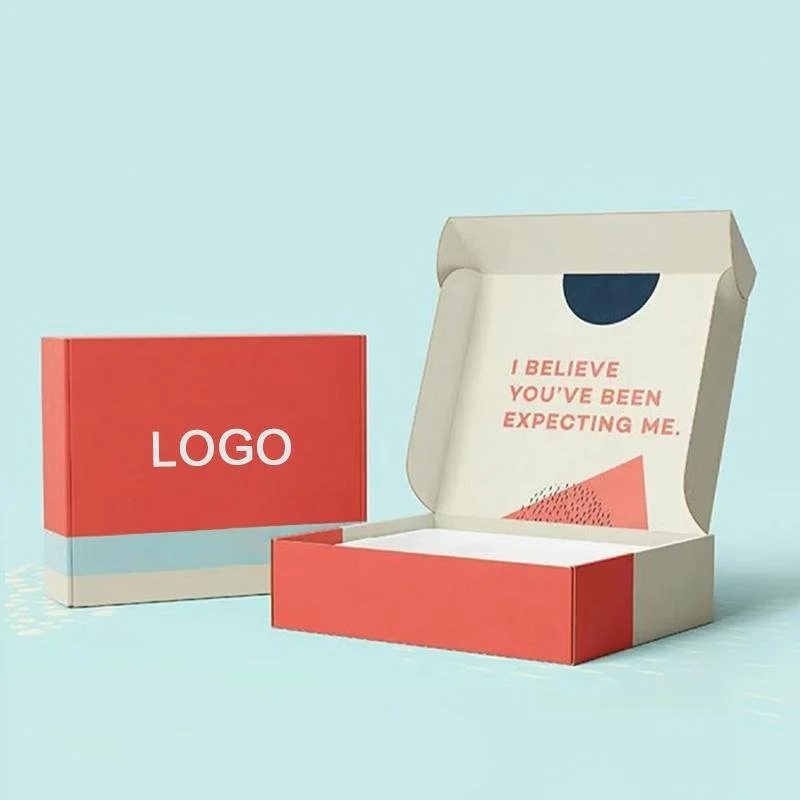
3) Die-Cut Mailer (Self-Locking Mailer)
What it is: A die-cut corrugated box with locking tabs; often used for DTC and subscription.
Best for: Branded unboxing, consistent assembly, tighter fit without excessive void fill.
Trade-offs: Requires tooling; per-unit cost can be higher than RSC at low volumes.
Typical customization: Tear strip, inside print, lock strength, retention wings, premium surfaces (E flute often preferred for print).
4) Telescoping Box (Full or Partial Telescope)
What it is: Two-piece design: lid telescopes over base.
Best for: Oversized/heavy items, stacking scenarios, or when you want stronger sidewalls and controlled opening.
Trade-offs: More material; more handling steps in packing.
Typical customization: Tight/loose fit preference, insert integration, straps, corner reinforcement.
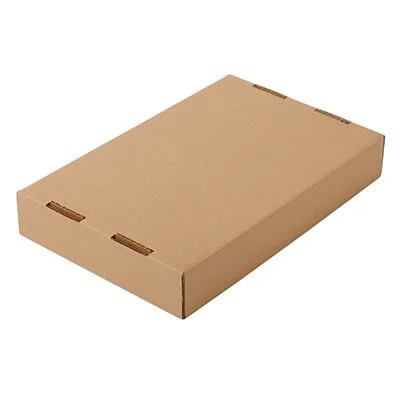
5) Tray / HSC (Half Slotted Container)
What it is: Open-top tray; often combined with a lid, sleeve, or overwrap.
Best for: Warehouse picking, display-ready packs, and inner trays inside a shipper.
Trade-offs: Needs a secondary closure method if used as a shipper.
Typical customization: Corner locks, die-cut hand holes, sleeve compatibility, printed handling marks.
6) One-Piece Folder (OPF)
What it is: Single-piece corrugated wrap that folds around a product.
Best for: Flat items, printed materials, frames, and goods that don’t “sit” well in a standard carton.
Trade-offs: Not ideal for loose, irregular kits unless combined with retention.
Typical customization: Wrap coverage, edge protection, fold guides, tape placement.
7) Five-Panel Folder (FPF)
What it is: A stronger folder style with extra panel coverage for long/flat products.
Best for: Long items and products needing added corner and edge protection.
Trade-offs: More board and folds; requires disciplined packing steps.
Typical customization: Panel overlap depth, reinforcement in high-impact zones.
8) Side-Loading Corrugated Carton
What it is: A carton designed to load from the side rather than the top.
Best for: Long products, bundled items, or fragile products that should not be top-dropped into a box.
Trade-offs: Closure design must be specified clearly to avoid weak seams.
Typical customization: Side closure method, internal retention, labeling orientation.
9) Wrap-Around / Roll-End Styles
What it is: A wrap-around structure commonly used when you need tight fit and fast packing.
Best for: High-volume packaging lines, consistent product sizes, retail-ready outers.
Trade-offs: Often requires precise sizing; may require gluing or specific machinery.
Typical customization: Locking features, glue pattern (if used), print orientation.
10) Multi-Depth Cartons (Scored Height Boxes)
What it is: Cartons with multiple score lines so the height can be adjusted.
Best for: Operations where fill height varies, or you want to reduce the number of SKUs.
Trade-offs: Requires consistent folding and QC to keep final height uniform.
Typical customization: Score intervals, fold guides, print marks.
11) Partitioned Shippers (RSC + Dividers)
What it is: A standard shipper combined with internal partitions for multiple units.
Best for: Glass bottles, jars, multi-unit shipping where movement and collision drive breakage.
Trade-offs: Slightly higher packing time; insert design must match product geometry.
Typical customization: Divider cell size, buffer zones, “top pad” or cushioning strategy.
12) Die-Cut Retention Cartons (Mailer + Inserts)
What it is: Die-cut designs that integrate retention features for a fixed product position.
Best for: Higher-value items, branded parcels, kits with multiple components.
Trade-offs: Tooling and design time; needs sample approval to lock tolerances.
Typical customization: Retention wings, pull tabs, multi-cavity layouts, premium surfaces.
Complete List of Corrugated Box Styles
If you need a broader reference list for RFQs and internal documentation, use this grouped view. It’s not meant to replace sampling—only to help you communicate unambiguously.
Slotted Container Family
- RSC (regular slotted)
- HSC (half slotted / tray)
- FOL (full overlap)
- Variations with special flap arrangements (for closure or cost control)
Telescoping Family
- Full telescope (lid + base)
- Partial telescope (cap over base)
- Heavy-duty telescoping variants (for stacking and export use)
Folders & Wraps Family
- One-piece folder (OPF)
- Five-panel folder (FPF)
- Wrap-around folders for long/flat products
Die-Cut / Self-Locking Family
- Self-locking mailers (subscription / DTC)
- Die-cut cartons with retention features
- Mailers with tear strips, handles, or display windows
Trays & Retail-Ready Family
- Trays with lids
- Display-ready tray + shipper combinations
- Shelf-ready outers with tear-away panels (when applicable)
Add-Ons That Change Performance (Not Just Looks)
Corrugated box style is only half the result. These add-ons often decide damage rates and packing speed.
Movement control (damage prevention)
- Partitions/dividers for multi-unit shippers
- Inserts (paperboard, molded pulp, foam) for fixed positioning
- Top pads and buffer zones for fragile items
Handling efficiency
- Die-cut hand holes (position and reinforcement matter)
- Orientation arrows and barcode zones
- Pack-out guides and line-of-business marks
Unboxing and brand experience
- Tear strips for easy opening
- Inside print for premium perception
- Cleaner closures and lock features for DTC programs
RFQ Checklist: What to Send to Get the Correct Corrugated Box Style Quoted
If you want accurate quotes fast—and fewer sample revisions—send this information up front.
| RFQ Input | What We Need From You | What You Get Back |
|---|---|---|
| Product and pack-out | Unit dimensions, weight, fragility, units per carton | Style recommendation aligned to risk |
| Shipping route | Parcel DTC vs pallet freight vs export | Board and closure guidance |
| Target style | RSC/FOL/mailer/telescope/folder (or “recommend”) | Clear design direction |
| Dimensions | Internal L × W × H + orientation preference | Correct sizing basis |
| Board preference | Single/double wall; flute preference (or “recommend”) | Strength-aligned proposal |
| Print needs | Coverage level, barcode/label zones | Prepress-ready planning |
| Add-ons | Dividers/inserts/tear strip/hand holes | Performance improvements |
| Timeline | Sample deadline + production window | Feasible production plan |
| Quality priority | Cost control vs damage reduction vs brand impact | Best-fit trade-offs explained |
FAQs: Corrugated Box Styles
What is the most common corrugated box style?
The most common is RSC, because it’s cost-efficient, widely available, and easy to pack at scale.
Which corrugated box style is best for eCommerce shipping?
For branded DTC parcels, die-cut mailer styles are common. For heavier shipments, RSC or FOL combined with inserts/partitions is often more practical.
When should I choose FOL instead of RSC?
Choose FOL when stacking pressure, puncture risk, or heavy loads make top/bottom panel strength critical.
What style is best for long or flat products?
One-piece folders and five-panel folders typically fit long/flat items better than a standard carton, reducing void space and improving edge protection.
Do die-cut boxes always cost more?
Not always in total cost. Unit price can be higher, but packing speed, reduced void fill, and lower damage rates can improve overall economics—especially in DTC programs.
How do I reduce damage without upgrading the whole board grade?
Control movement first: partitions, inserts, tighter fit, and correct pack-out often reduce damage more effectively than simply upgrading to heavier board.
Should I include a style code in my RFQ?
Yes. Clear style naming prevents suppliers from quoting different structures. If you don’t have a code, share a reference drawing or ask for a recommended style.
Can you customize corrugated box styles for branding?
Yes. Size, print coverage, inside print (for mailers), tear strips, handling marks, and partitions are common customizations—chosen based on your program goals.
Closing
Corrugated box styles are not “just shapes.” They are operational tools that control cost, packing efficiency, damage rates, and customer experience.
If you tell us your product dimensions, weight, shipping route, and whether your priority is cost control or damage reduction, we can recommend a corrugated box style and add-on plan that fits your program—then turn it into a quote-ready spec for sampling and production.
When customers ask us for “a corrugated box,” the first question we clarify is not the print—it’s the box style. Corrugated box styles determine how the carton carries load, how fast your team packs, how the box behaves in parcel delivery, and how consistently suppliers can reproduce it.
In this news guide, I’ll do two things in a buyer-friendly way:
- Show you the most commonly used corrugated box styles (the ones that solve 80% of real shipping needs)
- Provide a complete style list grouped by family, so you can communicate clearly in RFQs and avoid misquotes
Quick Match Table: Choose the Right Corrugated Box Style by Use Case
Start here if you want a fast, practical decision.
| Your Use Case | Best-Fit Corrugated Box Style | Why It Works | Common Add-Ons |
|---|---|---|---|
| General shipping cartons (most products) | RSC (Regular Slotted Container) | Best cost-to-performance, easy sourcing, fast packing | Print marks, barcode zone, tape pattern |
| Heavy items / stacking pressure | FOL (Full Overlap) or Telescope | Extra panel strength where cartons fail first | Double wall board, corner protection, straps |
| DTC / subscription / branded parcels | Die-cut mailer (self-locking) | Better fit + clean unboxing + faster assembly | Tear strip, locking tabs, inside print |
| Fragile goods (movement risk) | RSC + partitions/inserts or Die-cut with retention | Controls movement and impact damage | Dividers, molded inserts, cushioning |
| Long or flat products | One-piece folder / Five-panel folder | Wrap-around protection for non-box shapes | Edge guards, tape pattern |
| Warehouse picking / display-ready | Tray (HSC) + lid/overwrap | Open-top access and faster pick-pack | Lid, sleeves, corner locks |
| Multi-SKU kits (components) | Die-cut + multi-cavity or RSC + divider system | Keeps parts organized; reduces missing items | Partitions, labeling, foam/pulp insert |
| Variable-height packs | Multi-depth (scored height) cartons | One carton covers multiple fill heights | Score lines, fold guides |
The 12 Corrugated Box Styles Buyers Use Most
Below are the high-frequency styles we see in real procurement. For each one, I’ll give you: what it is, when it wins, what to watch, and what we can customize.
1) RSC (Regular Slotted Container)
What it is: The standard shipping carton with flaps meeting at the center.
Best for: Most general shipping, pallet freight, and export cartons where cost and scalability matter.
Trade-offs: Not the tightest fit for premium unboxing; relies on tape for closure.
Typical customization: Custom size, board strength (single/double wall), flexo printing, barcode/label zones, tape pattern, partitions.
2) FOL (Full Overlap Slotted Container)
What it is: A slotted box where outer flaps overlap fully when closed.
Best for: Heavy items, stacking pressure, puncture risk, and long routes.
Trade-offs: Uses more board; slightly higher cost; still tape-based.
Typical customization: Double wall board, reinforced tape zones, straps, edge protection, “this side up” marks.
3) Die-Cut Mailer (Self-Locking Mailer)
What it is: A die-cut corrugated box with locking tabs; often used for DTC and subscription.
Best for: Branded unboxing, consistent assembly, tighter fit without excessive void fill.
Trade-offs: Requires tooling; per-unit cost can be higher than RSC at low volumes.
Typical customization: Tear strip, inside print, lock strength, retention wings, premium surfaces (E flute often preferred for print).
4) Telescoping Box (Full or Partial Telescope)
What it is: Two-piece design: lid telescopes over base.
Best for: Oversized/heavy items, stacking scenarios, or when you want stronger sidewalls and controlled opening.
Trade-offs: More material; more handling steps in packing.
Typical customization: Tight/loose fit preference, insert integration, straps, corner reinforcement.
5) Tray / HSC (Half Slotted Container)
What it is: Open-top tray; often combined with a lid, sleeve, or overwrap.
Best for: Warehouse picking, display-ready packs, and inner trays inside a shipper.
Trade-offs: Needs a secondary closure method if used as a shipper.
Typical customization: Corner locks, die-cut hand holes, sleeve compatibility, printed handling marks.
6) One-Piece Folder (OPF)
What it is: Single-piece corrugated wrap that folds around a product.
Best for: Flat items, printed materials, frames, and goods that don’t “sit” well in a standard carton.
Trade-offs: Not ideal for loose, irregular kits unless combined with retention.
Typical customization: Wrap coverage, edge protection, fold guides, tape placement.
7) Five-Panel Folder (FPF)
What it is: A stronger folder style with extra panel coverage for long/flat products.
Best for: Long items and products needing added corner and edge protection.
Trade-offs: More board and folds; requires disciplined packing steps.
Typical customization: Panel overlap depth, reinforcement in high-impact zones.
8) Side-Loading Corrugated Carton
What it is: A carton designed to load from the side rather than the top.
Best for: Long products, bundled items, or fragile products that should not be top-dropped into a box.
Trade-offs: Closure design must be specified clearly to avoid weak seams.
Typical customization: Side closure method, internal retention, labeling orientation.
9) Wrap-Around / Roll-End Styles
What it is: A wrap-around structure commonly used when you need tight fit and fast packing.
Best for: High-volume packaging lines, consistent product sizes, retail-ready outers.
Trade-offs: Often requires precise sizing; may require gluing or specific machinery.
Typical customization: Locking features, glue pattern (if used), print orientation.
10) Multi-Depth Cartons (Scored Height Boxes)
What it is: Cartons with multiple score lines so the height can be adjusted.
Best for: Operations where fill height varies, or you want to reduce the number of SKUs.
Trade-offs: Requires consistent folding and QC to keep final height uniform.
Typical customization: Score intervals, fold guides, print marks.
11) Partitioned Shippers (RSC + Dividers)
What it is: A standard shipper combined with internal partitions for multiple units.
Best for: Glass bottles, jars, multi-unit shipping where movement and collision drive breakage.
Trade-offs: Slightly higher packing time; insert design must match product geometry.
Typical customization: Divider cell size, buffer zones, “top pad” or cushioning strategy.
12) Die-Cut Retention Cartons (Mailer + Inserts)
What it is: Die-cut designs that integrate retention features for a fixed product position.
Best for: Higher-value items, branded parcels, kits with multiple components.
Trade-offs: Tooling and design time; needs sample approval to lock tolerances.
Typical customization: Retention wings, pull tabs, multi-cavity layouts, premium surfaces.
Complete List of Corrugated Box Styles
If you need a broader reference list for RFQs and internal documentation, use this grouped view. It’s not meant to replace sampling—only to help you communicate unambiguously.
Slotted Container Family
- RSC (regular slotted)
- HSC (half slotted / tray)
- FOL (full overlap)
- Variations with special flap arrangements (for closure or cost control)
Telescoping Family
- Full telescope (lid + base)
- Partial telescope (cap over base)
- Heavy-duty telescoping variants (for stacking and export use)
Folders & Wraps Family
- One-piece folder (OPF)
- Five-panel folder (FPF)
- Wrap-around folders for long/flat products
Die-Cut / Self-Locking Family
- Self-locking mailers (subscription / DTC)
- Die-cut cartons with retention features
- Mailers with tear strips, handles, or display windows
Trays & Retail-Ready Family
- Trays with lids
- Display-ready tray + shipper combinations
- Shelf-ready outers with tear-away panels (when applicable)
Add-Ons That Change Performance (Not Just Looks)
Corrugated box style is only half the result. These add-ons often decide damage rates and packing speed.
Movement control (damage prevention)
- Partitions/dividers for multi-unit shippers
- Inserts (paperboard, molded pulp, foam) for fixed positioning
- Top pads and buffer zones for fragile items
Handling efficiency
- Die-cut hand holes (position and reinforcement matter)
- Orientation arrows and barcode zones
- Pack-out guides and line-of-business marks
Unboxing and brand experience
- Tear strips for easy opening
- Inside print for premium perception
- Cleaner closures and lock features for DTC programs
RFQ Checklist: What to Send to Get the Correct Corrugated Box Style Quoted
If you want accurate quotes fast—and fewer sample revisions—send this information up front.
| RFQ Input | What We Need From You | What You Get Back |
|---|---|---|
| Product and pack-out | Unit dimensions, weight, fragility, units per carton | Style recommendation aligned to risk |
| Shipping route | Parcel DTC vs pallet freight vs export | Board and closure guidance |
| Target style | RSC/FOL/mailer/telescope/folder (or “recommend”) | Clear design direction |
| Dimensions | Internal L × W × H + orientation preference | Correct sizing basis |
| Board preference | Single/double wall; flute preference (or “recommend”) | Strength-aligned proposal |
| Print needs | Coverage level, barcode/label zones | Prepress-ready planning |
| Add-ons | Dividers/inserts/tear strip/hand holes | Performance improvements |
| Timeline | Sample deadline + production window | Feasible production plan |
| Quality priority | Cost control vs damage reduction vs brand impact | Best-fit trade-offs explained |
FAQs: Corrugated Box Styles
What is the most common corrugated box style?
The most common is RSC, because it’s cost-efficient, widely available, and easy to pack at scale.
Which corrugated box style is best for eCommerce shipping?
For branded DTC parcels, die-cut mailer styles are common. For heavier shipments, RSC or FOL combined with inserts/partitions is often more practical.
When should I choose FOL instead of RSC?
Choose FOL when stacking pressure, puncture risk, or heavy loads make top/bottom panel strength critical.
What style is best for long or flat products?
One-piece folders and five-panel folders typically fit long/flat items better than a standard carton, reducing void space and improving edge protection.
Do die-cut boxes always cost more?
Not always in total cost. Unit price can be higher, but packing speed, reduced void fill, and lower damage rates can improve overall economics—especially in DTC programs.
How do I reduce damage without upgrading the whole board grade?
Control movement first: partitions, inserts, tighter fit, and correct pack-out often reduce damage more effectively than simply upgrading to heavier board.
Should I include a style code in my RFQ?
Yes. Clear style naming prevents suppliers from quoting different structures. If you don’t have a code, share a reference drawing or ask for a recommended style.
Can you customize corrugated box styles for branding?
Yes. Size, print coverage, inside print (for mailers), tear strips, handling marks, and partitions are common customizations—chosen based on your program goals.
Closing
Corrugated box styles are not “just shapes.” They are operational tools that control cost, packing efficiency, damage rates, and customer experience.
If you tell us your product dimensions, weight, shipping route, and whether your priority is cost control or damage reduction, we can recommend a corrugated box style and add-on plan that fits your program—then turn it into a quote-ready spec for sampling and production.