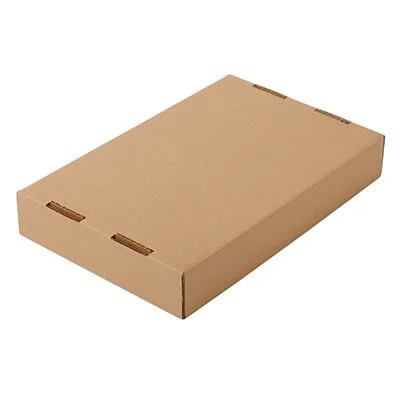
When you ask for a corrugated shipping carton, the real risk is not the box—it’s the spec. If the corrugated carton box specification is vague, different suppliers will quote different constructions, you’ll see inconsistent samples, and your receiving team will struggle to verify quality.
In our day-to-day work with importers, distributors, and brand owners, we treat the spec as a shared language. Our goal is simple: one clear carton specification that every supplier can quote consistently—and your QC team can check quickly.
What a Corrugated Carton Box Specification Really Is
A corrugated carton box specification is a structured requirement sheet that defines:
- Box design (what style you’re buying)
- Dimensions (what “size” means—internal or external)
- Board construction (wall + flute)
- Strength requirement (ECT or Burst/Mullen)
- Printing, closure, and pack-out (how the carton works in real operations)
- Acceptance and context (how it will be checked and what environment it must survive)
If any of these are missing, you don’t have a specification—you have an assumption.
The 4 Decisions We Lock First
Before we talk about printing or accessories, we lock these four fields. They determine the carton’s cost, performance, and consistency.
1) Box style (design)
Standard slotted cartons, full overlap, die-cut mailers, telescoping cartons, trays—each behaves differently in packing and shipping.
2) Dimension reference
We explicitly state internal L × W × H unless you tell us external constraints (pallet pattern, shelf fit, master carton nesting).
3) Board construction
Single wall / double wall / triple wall plus flute profile (A/B/C/E/F or combinations).
4) Strength rating language
We align on ECT or Burst/Mullen (or both, if your market requires it), so quotes are comparable.
Corrugated Box Spec Sheet Template
Below is the customer-facing carton specification template we use. You can paste it into your RFQ or PO.
Specification Sheet
| Specification Item | What You Should Provide | Why It Matters |
|---|---|---|
| Box style / design | RSC / FOL / die-cut / telescope / tray (or “recommend”) | Prevents suppliers quoting different structures |
| Dimensions | Internal L × W × H (mm or inches) | Controls fit and pack-out |
| Orientation rule | Confirm which panel is L vs W; define H | Avoids swapped dimensions |
| Tolerance | “Critical dims: L/W/H; approve by sample” (or a stated tolerance) | Makes QC measurable |
| Board construction | Single / double / triple wall + flute type | Drives stacking, cushioning, puncture resistance |
| Strength rating | ECT target or Burst/Mullen target (or “recommend”) | Aligns performance expectations |
| Liner preference | Kraft / test liner / mixed (if required) | Affects appearance and consistency |
| Printing | None / 1–2 color / high coverage print | Impacts cost, lead time, artwork setup |
| Finishing | Scuff resistance / moisture exposure note (if needed) | Reduces rub marks and claims |
| Closure method | Tape / glue / staples / self-lock | Impacts packing speed and reliability |
| Delivery form | Flat-packed / pre-glued / bundle quantity | Warehouse efficiency |
| Pack-out details | Units per carton, orientation arrows, labels | Reduces handling errors |
| Internal fit control | Dividers / partitions / inserts (if needed) | Prevents movement damage |
| Shipping route | Parcel / pallet freight / export | Sets risk profile and board choice |
| Acceptance | Critical defects + sampling approval as standard | Prevents disputes |
If you’re unsure about any field, we can recommend defaults based on your product weight, fragility, and distribution route.
Box Style: Picking the Right Carton Design for Your Workflow
“Corrugated carton” can mean very different designs. Here’s the buyer-friendly way we position the most common options:
- RSC (Regular Slotted Container): the baseline shipping carton. Efficient, scalable, and easiest to source consistently.
- FOL (Full Overlap): overlapping flaps add strength on top/bottom panels—useful when stacking and puncture risk matter.
- Die-cut / mailer-style cartons: better fit, faster assembly, stronger unboxing experience—often used for parcel programs and branded delivery.
- Telescoping cartons: lid + base design—useful when you want added rigidity and a more controlled pack-out.
- Trays / half-slotted styles: for picking, display, or inner trays inside a shipper.
If you want the simplest procurement process, we usually anchor the spec around RSC and only move to other styles when the use case justifies it.
Dimensions: Internal vs External, and How We Prevent “It Doesn’t Fit” Problems
Our default: internal dimensions
For product fit and packing, we specify internal L × W × H. This avoids the common issue where cartons look correct “on paper” but are tight after board thickness and folding are applied.
When external dimensions matter
We add external constraints when:
- Your carton must fit a specific pallet footprint or master case pattern
- You have shelf or automation constraints
- The carton must nest inside another box
Tolerance (keep it practical)
If you don’t have a formal tolerance standard, a clean approach is:
- Define critical dimensions (internal L/W/H)
- Use sample approval as the tolerance anchor
- Add a simple acceptance statement: “Production must match approved pre-production sample.”
That keeps the spec enforceable without slowing the RFQ stage.
Board Construction: Wall Type + Flute Type (How Performance Really Changes)
Wall type (layers)
- Single wall: standard shipping loads and many general cartons
- Double wall: heavier items, higher stacking pressure, longer routes, higher damage costs
- Triple wall: industrial or extreme compression environments
Flute type (profile)
Flutes affect thickness, cushioning, rigidity, and print surface.
- A flute: thicker, more cushioning
- C flute: balanced “general shipping” performance
- B flute: good puncture resistance and stacking for its thickness
- E flute: thinner, smoother surface—popular for branded mailers and print-heavy cartons
- F flute: very thin—used when premium print and smaller cartons are priorities
How we decide quickly
- If your biggest risk is stacking/compression, we prioritize wall type and board rigidity.
- If your biggest risk is impact, we prioritize fit control (pack-out) and then board.
- If your biggest priority is print quality, we prioritize smoother flute profiles and controlled finishing.
Strength Rating: ECT vs Burst/Mullen (And What We Put in a Carton Spec)
A corrugated carton box specification often fails when “strength” is described as “strong” instead of a standard rating.
ECT (Edge Crush Test)
ECT is commonly used to express edge strength and stacking-related performance. If your cartons face warehouse stacking, long transit, or heavy unit loads, ECT-based specs are usually easier to manage consistently across suppliers.
Burst/Mullen
Burst strength is still widely referenced in some industries and legacy standards. If your customer, distributor, or region requires it, we include it—so the carton spec matches your market reality.
Our practical approach
- If you have an existing standard, we follow it.
- If you don’t, we base the recommended rating on your product weight, units per carton, stacking scenario, and distribution route, then confirm with sampling.
Printing, Finishing, and Pack-Out: The Fields That Prevent Claims
Many packaging failures are not board failures—they’re workflow failures.
Printing
To keep carton printing consistent, the spec should state:
- Color count and coverage (light mark vs full coverage)
- Barcode/label zones
- Orientation arrows if required by your packing process
Finishing (keep it performance-based)
Instead of over-specifying chemistry, we write performance intent:
- “Scuff resistance required for parcel handling.”
- “Moisture exposure expected during warehousing.”
Pack-out requirements
If you ship fragile goods or multi-item kits, the spec should include:
- Units per carton
- Dividers/partitions/inserts if movement control matters
- Any “this side up” or handling marks
This is often the fastest way to reduce damage without overbuilding board grade.
Testing Context: When We Add Validation Language
Not every carton needs formal testing language. But when damage cost is high, we add a simple context line so suppliers understand the real shipping environment.
When it’s worth adding
- Direct-to-customer parcel delivery
- Cross-border routes with longer handling chains
- High-value or fragile goods
- Programs with recurring damage claims
What we write (simple, customer-friendly)
- “Carton must withstand typical parcel handling without product damage.”
- “Supplier should support packaging validation if required.”
This keeps the carton specification clear without turning your RFQ into a lab document.
RFQ Checklist: What We Ask You For to Quote Accurately
If you want fast, comparable quotations, send these inputs:
| RFQ Input | What to Provide |
|---|---|
| Product | Unit weight, fragility, dimensions, units per carton |
| Shipping route | Parcel / pallet freight / export |
| Carton style | RSC/FOL/die-cut/telescope (or “recommend”) |
| Dimensions | Internal L × W × H + orientation |
| Board construction | Wall + flute preference (or “recommend”) |
| Strength rating | ECT or Burst/Mullen target (or “recommend with rationale”) |
| Closure | Tape/glue/self-lock; packing speed priorities |
| Printing | Color count, coverage, barcode/label zones |
| Pack-out | Dividers/inserts, orientation arrows |
| Timeline | Sampling deadline + production window |
| Quality priorities | Consistency, rub resistance, stacking risk, cost control |
FAQs: Corrugated Carton Box Specification
Is a corrugated carton box specification the same as a “box size”?
No. “Box size” is one field. A full corrugated carton specification includes style, internal dimension reference, board construction, strength rating, closure, and pack-out expectations.
Should I specify internal or external dimensions?
For product fit, we recommend internal dimensions. Add external constraints only when you have pallet/shelf/automation requirements.
When do I need double wall corrugated?
Typically when weight is higher, stacking pressure is higher, routes are rougher, or the cost of damage is high enough to justify the upgrade.
Do I need to specify flute type?
If performance or print quality is sensitive, yes. If you’re unsure, state your route and risk profile and request a recommended flute/wall combination with the quote.
What is the biggest mistake buyers make in carton specs?
Leaving out the dimension reference (internal vs external) and strength language (ECT or Burst/Mullen), which leads to incomparable quotes.
Should I include a testing requirement?
Only when the shipping environment is variable and claims matter (parcel DTC, cross-border, fragile items). Otherwise, the spec sheet plus sampling approval is usually enough.
Closing
When you need cartons that perform consistently, the fastest path is a clear corrugated carton box specification—one that every supplier can quote the same way and your QC team can verify with confidence.
If you share your product, shipping route, and pack-out plan, we’ll respond with a spec recommendation you can use immediately for RFQs: box style, internal dimensions, board construction, strength rating language, and the key operational fields that reduce claims.
When you ask for a corrugated shipping carton, the real risk is not the box—it’s the spec. If the corrugated carton box specification is vague, different suppliers will quote different constructions, you’ll see inconsistent samples, and your receiving team will struggle to verify quality.
In our day-to-day work with importers, distributors, and brand owners, we treat the spec as a shared language. Our goal is simple: one clear carton specification that every supplier can quote consistently—and your QC team can check quickly.
What a Corrugated Carton Box Specification Really Is
A corrugated carton box specification is a structured requirement sheet that defines:
- Box design (what style you’re buying)
- Dimensions (what “size” means—internal or external)
- Board construction (wall + flute)
- Strength requirement (ECT or Burst/Mullen)
- Printing, closure, and pack-out (how the carton works in real operations)
- Acceptance and context (how it will be checked and what environment it must survive)
If any of these are missing, you don’t have a specification—you have an assumption.
The 4 Decisions We Lock First
Before we talk about printing or accessories, we lock these four fields. They determine the carton’s cost, performance, and consistency.
1) Box style (design)
Standard slotted cartons, full overlap, die-cut mailers, telescoping cartons, trays—each behaves differently in packing and shipping.
2) Dimension reference
We explicitly state internal L × W × H unless you tell us external constraints (pallet pattern, shelf fit, master carton nesting).
3) Board construction
Single wall / double wall / triple wall plus flute profile (A/B/C/E/F or combinations).
4) Strength rating language
We align on ECT or Burst/Mullen (or both, if your market requires it), so quotes are comparable.
Corrugated Box Spec Sheet Template
Below is the customer-facing carton specification template we use. You can paste it into your RFQ or PO.
Specification Sheet
| Specification Item | What You Should Provide | Why It Matters |
|---|---|---|
| Box style / design | RSC / FOL / die-cut / telescope / tray (or “recommend”) | Prevents suppliers quoting different structures |
| Dimensions | Internal L × W × H (mm or inches) | Controls fit and pack-out |
| Orientation rule | Confirm which panel is L vs W; define H | Avoids swapped dimensions |
| Tolerance | “Critical dims: L/W/H; approve by sample” (or a stated tolerance) | Makes QC measurable |
| Board construction | Single / double / triple wall + flute type | Drives stacking, cushioning, puncture resistance |
| Strength rating | ECT target or Burst/Mullen target (or “recommend”) | Aligns performance expectations |
| Liner preference | Kraft / test liner / mixed (if required) | Affects appearance and consistency |
| Printing | None / 1–2 color / high coverage print | Impacts cost, lead time, artwork setup |
| Finishing | Scuff resistance / moisture exposure note (if needed) | Reduces rub marks and claims |
| Closure method | Tape / glue / staples / self-lock | Impacts packing speed and reliability |
| Delivery form | Flat-packed / pre-glued / bundle quantity | Warehouse efficiency |
| Pack-out details | Units per carton, orientation arrows, labels | Reduces handling errors |
| Internal fit control | Dividers / partitions / inserts (if needed) | Prevents movement damage |
| Shipping route | Parcel / pallet freight / export | Sets risk profile and board choice |
| Acceptance | Critical defects + sampling approval as standard | Prevents disputes |
If you’re unsure about any field, we can recommend defaults based on your product weight, fragility, and distribution route.
Box Style: Picking the Right Carton Design for Your Workflow
“Corrugated carton” can mean very different designs. Here’s the buyer-friendly way we position the most common options:
- RSC (Regular Slotted Container): the baseline shipping carton. Efficient, scalable, and easiest to source consistently.
- FOL (Full Overlap): overlapping flaps add strength on top/bottom panels—useful when stacking and puncture risk matter.
- Die-cut / mailer-style cartons: better fit, faster assembly, stronger unboxing experience—often used for parcel programs and branded delivery.
- Telescoping cartons: lid + base design—useful when you want added rigidity and a more controlled pack-out.
- Trays / half-slotted styles: for picking, display, or inner trays inside a shipper.
If you want the simplest procurement process, we usually anchor the spec around RSC and only move to other styles when the use case justifies it.
Dimensions: Internal vs External, and How We Prevent “It Doesn’t Fit” Problems
Our default: internal dimensions
For product fit and packing, we specify internal L × W × H. This avoids the common issue where cartons look correct “on paper” but are tight after board thickness and folding are applied.
When external dimensions matter
We add external constraints when:
- Your carton must fit a specific pallet footprint or master case pattern
- You have shelf or automation constraints
- The carton must nest inside another box
Tolerance (keep it practical)
If you don’t have a formal tolerance standard, a clean approach is:
- Define critical dimensions (internal L/W/H)
- Use sample approval as the tolerance anchor
- Add a simple acceptance statement: “Production must match approved pre-production sample.”
That keeps the spec enforceable without slowing the RFQ stage.
Board Construction: Wall Type + Flute Type (How Performance Really Changes)
Wall type (layers)
- Single wall: standard shipping loads and many general cartons
- Double wall: heavier items, higher stacking pressure, longer routes, higher damage costs
- Triple wall: industrial or extreme compression environments
Flute type (profile)
Flutes affect thickness, cushioning, rigidity, and print surface.
- A flute: thicker, more cushioning
- C flute: balanced “general shipping” performance
- B flute: good puncture resistance and stacking for its thickness
- E flute: thinner, smoother surface—popular for branded mailers and print-heavy cartons
- F flute: very thin—used when premium print and smaller cartons are priorities
How we decide quickly
- If your biggest risk is stacking/compression, we prioritize wall type and board rigidity.
- If your biggest risk is impact, we prioritize fit control (pack-out) and then board.
- If your biggest priority is print quality, we prioritize smoother flute profiles and controlled finishing.
Strength Rating: ECT vs Burst/Mullen (And What We Put in a Carton Spec)
A corrugated carton box specification often fails when “strength” is described as “strong” instead of a standard rating.
ECT (Edge Crush Test)
ECT is commonly used to express edge strength and stacking-related performance. If your cartons face warehouse stacking, long transit, or heavy unit loads, ECT-based specs are usually easier to manage consistently across suppliers.
Burst/Mullen
Burst strength is still widely referenced in some industries and legacy standards. If your customer, distributor, or region requires it, we include it—so the carton spec matches your market reality.
Our practical approach
- If you have an existing standard, we follow it.
- If you don’t, we base the recommended rating on your product weight, units per carton, stacking scenario, and distribution route, then confirm with sampling.
Printing, Finishing, and Pack-Out: The Fields That Prevent Claims
Many packaging failures are not board failures—they’re workflow failures.
Printing
To keep carton printing consistent, the spec should state:
- Color count and coverage (light mark vs full coverage)
- Barcode/label zones
- Orientation arrows if required by your packing process
Finishing (keep it performance-based)
Instead of over-specifying chemistry, we write performance intent:
- “Scuff resistance required for parcel handling.”
- “Moisture exposure expected during warehousing.”
Pack-out requirements
If you ship fragile goods or multi-item kits, the spec should include:
- Units per carton
- Dividers/partitions/inserts if movement control matters
- Any “this side up” or handling marks
This is often the fastest way to reduce damage without overbuilding board grade.
Testing Context: When We Add Validation Language
Not every carton needs formal testing language. But when damage cost is high, we add a simple context line so suppliers understand the real shipping environment.
When it’s worth adding
- Direct-to-customer parcel delivery
- Cross-border routes with longer handling chains
- High-value or fragile goods
- Programs with recurring damage claims
What we write (simple, customer-friendly)
- “Carton must withstand typical parcel handling without product damage.”
- “Supplier should support packaging validation if required.”
This keeps the carton specification clear without turning your RFQ into a lab document.
RFQ Checklist: What We Ask You For to Quote Accurately
If you want fast, comparable quotations, send these inputs:
| RFQ Input | What to Provide |
|---|---|
| Product | Unit weight, fragility, dimensions, units per carton |
| Shipping route | Parcel / pallet freight / export |
| Carton style | RSC/FOL/die-cut/telescope (or “recommend”) |
| Dimensions | Internal L × W × H + orientation |
| Board construction | Wall + flute preference (or “recommend”) |
| Strength rating | ECT or Burst/Mullen target (or “recommend with rationale”) |
| Closure | Tape/glue/self-lock; packing speed priorities |
| Printing | Color count, coverage, barcode/label zones |
| Pack-out | Dividers/inserts, orientation arrows |
| Timeline | Sampling deadline + production window |
| Quality priorities | Consistency, rub resistance, stacking risk, cost control |
FAQs: Corrugated Carton Box Specification
Is a corrugated carton box specification the same as a “box size”?
No. “Box size” is one field. A full corrugated carton specification includes style, internal dimension reference, board construction, strength rating, closure, and pack-out expectations.
Should I specify internal or external dimensions?
For product fit, we recommend internal dimensions. Add external constraints only when you have pallet/shelf/automation requirements.
When do I need double wall corrugated?
Typically when weight is higher, stacking pressure is higher, routes are rougher, or the cost of damage is high enough to justify the upgrade.
Do I need to specify flute type?
If performance or print quality is sensitive, yes. If you’re unsure, state your route and risk profile and request a recommended flute/wall combination with the quote.
What is the biggest mistake buyers make in carton specs?
Leaving out the dimension reference (internal vs external) and strength language (ECT or Burst/Mullen), which leads to incomparable quotes.
Should I include a testing requirement?
Only when the shipping environment is variable and claims matter (parcel DTC, cross-border, fragile items). Otherwise, the spec sheet plus sampling approval is usually enough.
Closing
When you need cartons that perform consistently, the fastest path is a clear corrugated carton box specification—one that every supplier can quote the same way and your QC team can verify with confidence.
If you share your product, shipping route, and pack-out plan, we’ll respond with a spec recommendation you can use immediately for RFQs: box style, internal dimensions, board construction, strength rating language, and the key operational fields that reduce claims.