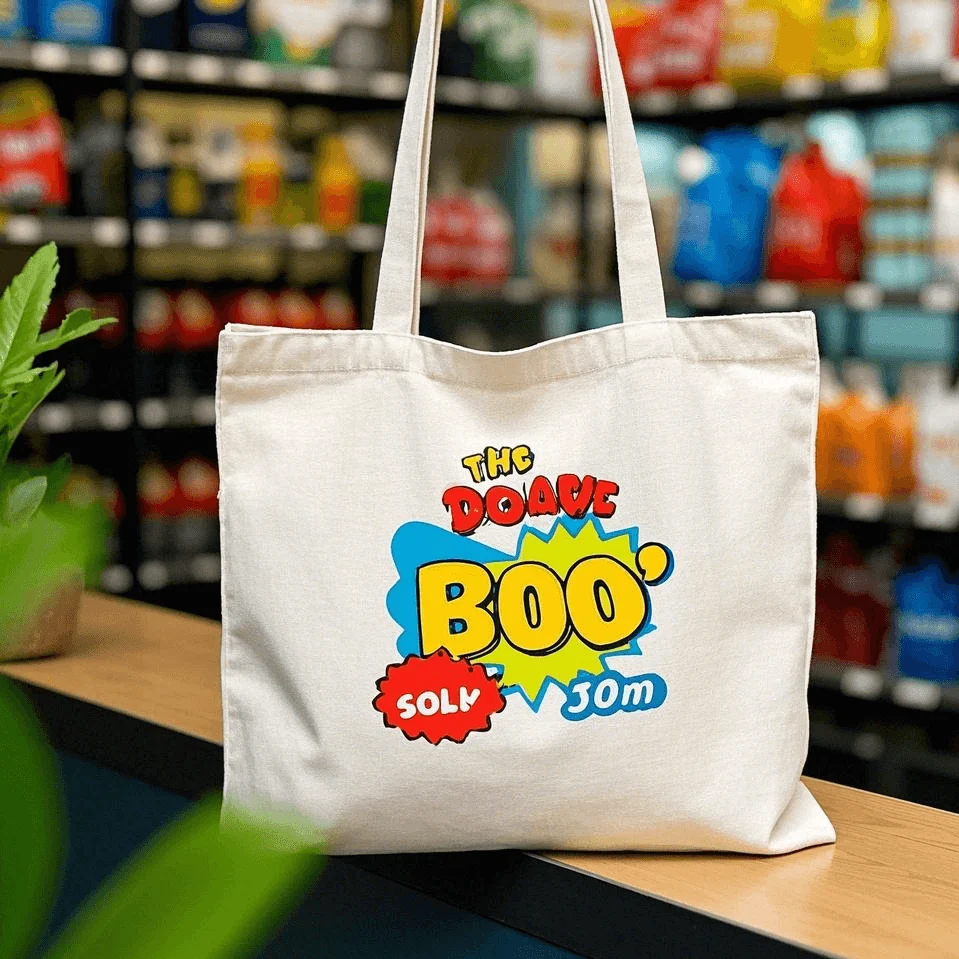
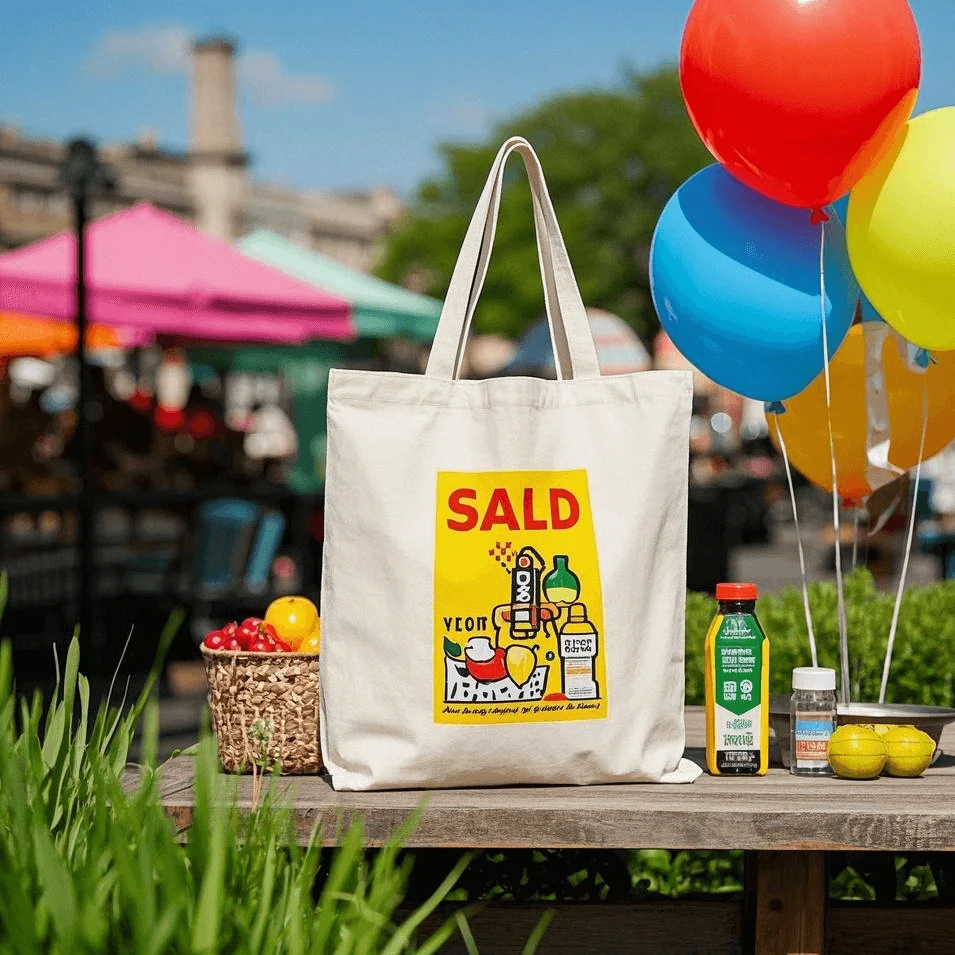
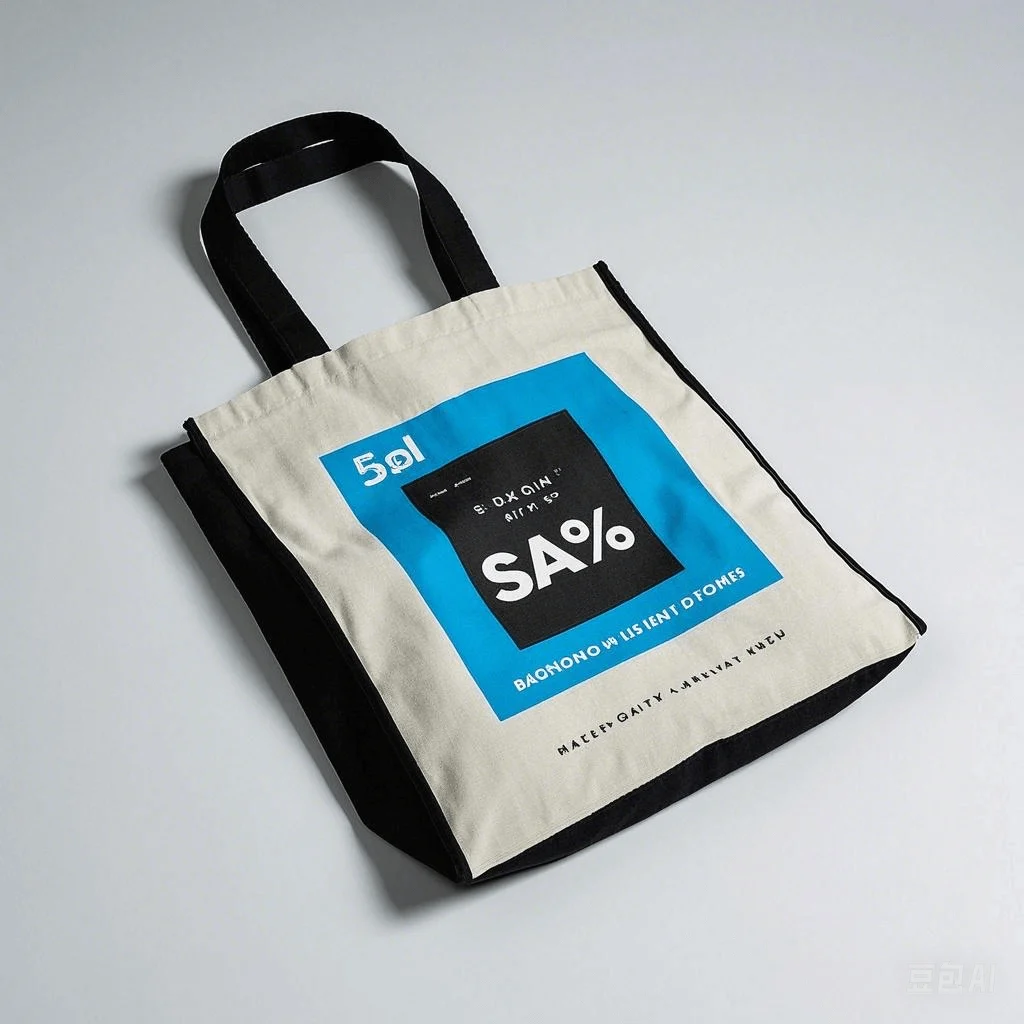
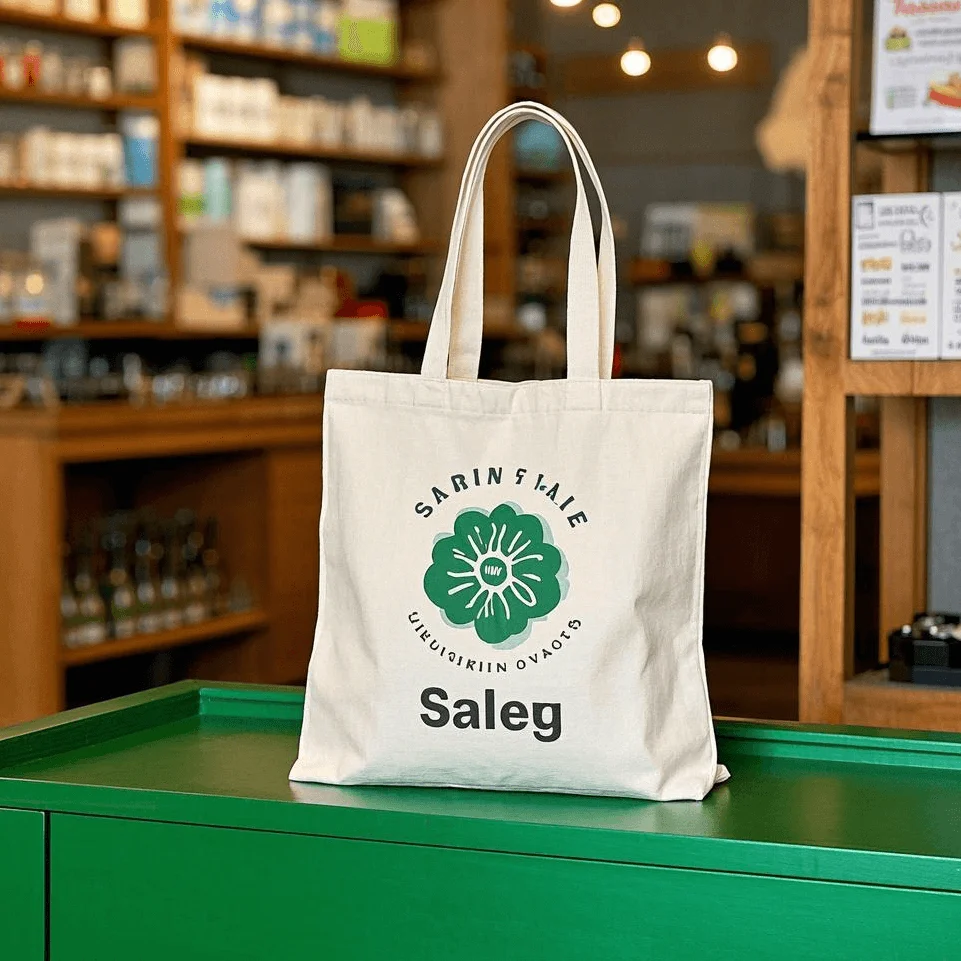
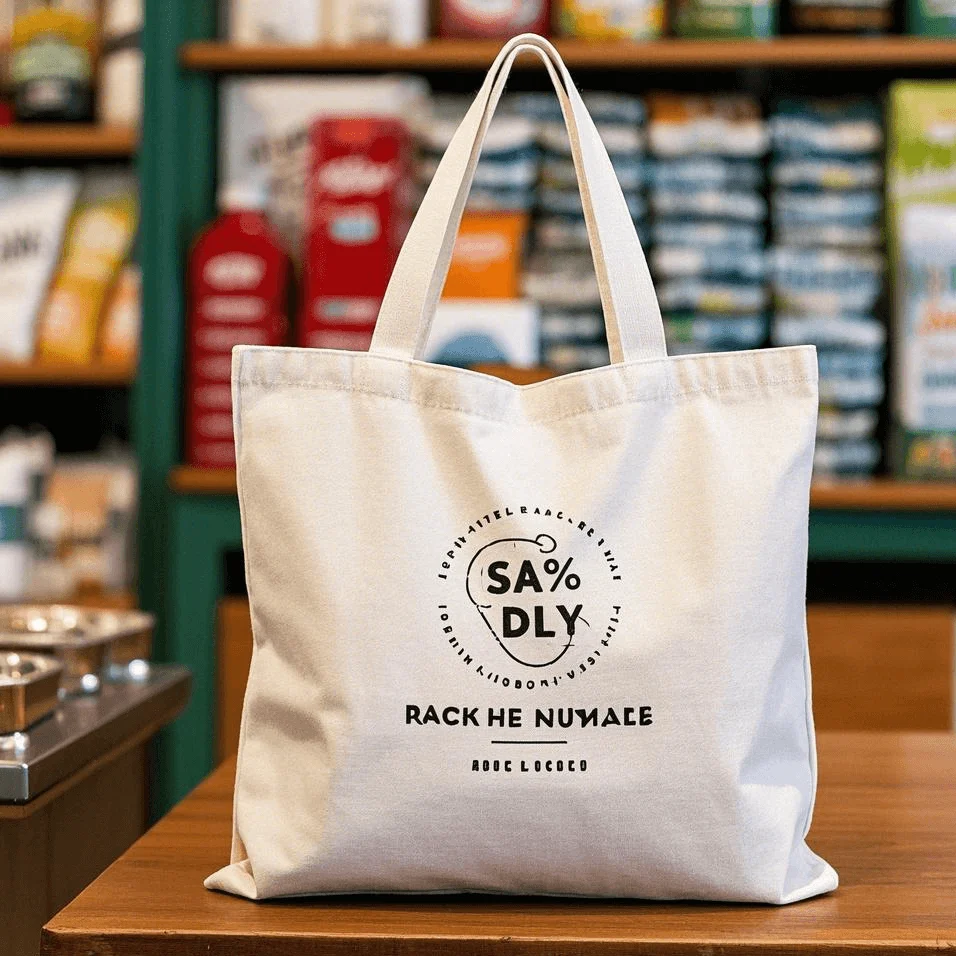
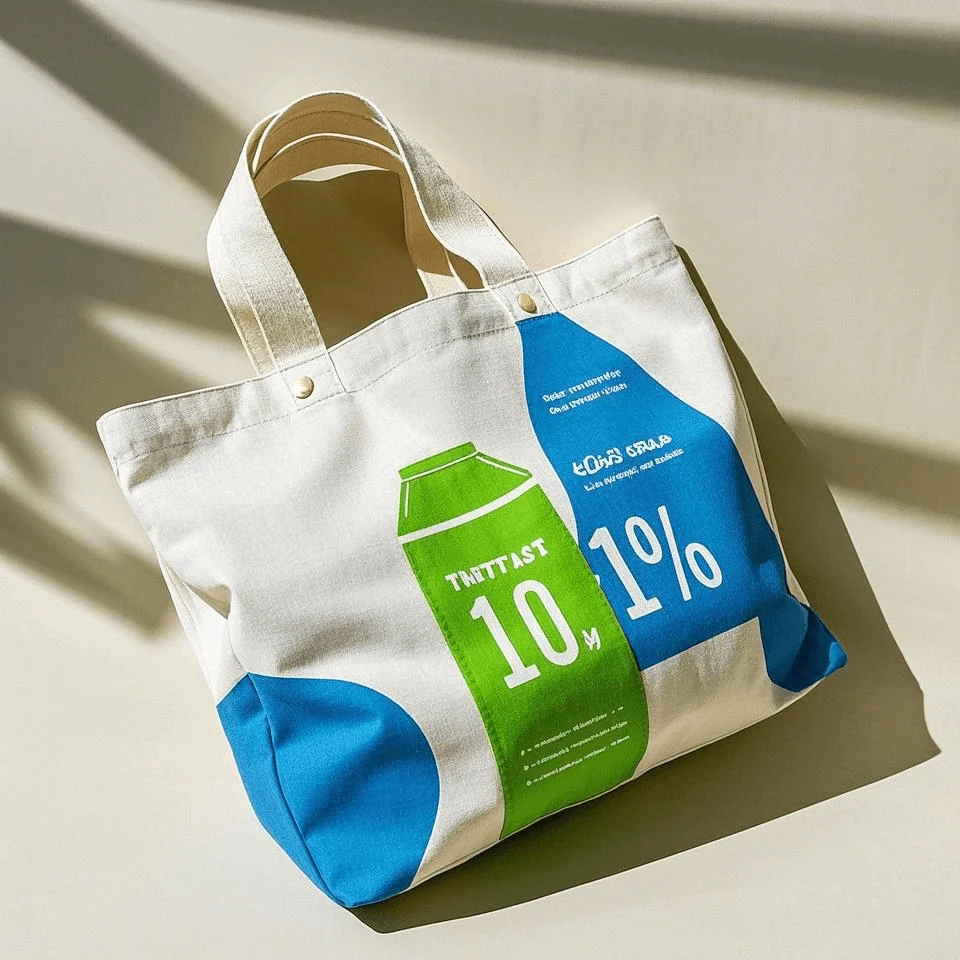
Custom Promotional Canvas Shopping Bags
Promotional canvas shopping bags that keep your brand visible long after the event ends.
I produce custom promotional canvas shopping bags for brands, retailers, event organizers, and distributors who need a giveaway that feels premium, performs in daily use, and supports repeat reorders with consistent quality. Instead of treating this as “just a tote,” I build a program-ready spec around fabric + weight + structure + decoration method + reinforcement + export packing—so you get predictable outcomes, not surprises.
Quick Specs
Core specification options
- Bag types: flat tote, bottom-gusset tote, side+bottom-gusset tote, zip-top/pocket options (available upon request)
- Fabrics: cotton canvas, polyester canvas, oxford cloth
- Weights: selection based on use case (giveaway vs daily retail vs heavy-duty)
- Decoration: screen printing, digital printing, heat transfer, embroidery
- Add-ons: zipper, button, Velcro closures, pockets
- Reinforcement: multi-line stitching, stress-point reinforcement, edge binding
Quick Specs Table
| Spec Item | Standard Options I Support | What It Means for Your Program |
|---|---|---|
| Size format | W × H (flat) / W × H × G (gusseted) | Gussets add capacity and stability when filled |
| Fabric | Cotton canvas / Polyester canvas / Oxford cloth | Controls hand-feel, durability, and use environment |
| Fabric weight | oz or GSM (matched to use case) | Heavier weights hold shape and last longer in daily use |
| Print methods | Screen / Digital / Heat transfer / Embroidery | Chosen based on artwork complexity, colors, and budget |
| Print placements | Front / Back / Gusset | Drives brand visibility and layout planning |
| Closures & accessories | Zipper / Button / Velcro / Pockets | Adds function and perceived value for higher-impact giveaways |
| QC focus | Size consistency, stitching, print clarity, cleanliness | Reduces returns and protects brand presentation |
| Packing | Flat-packed export cartons | Helps reduce creasing and surface rub during transit |
Design & Branding Highlights
Brand visibility placement (what I recommend)
For promotional campaigns, I prioritize placements that are naturally visible in real-world carrying:
- Front panel: best for primary logo and campaign message
- Back panel: ideal for secondary branding, QR code, or sponsor list
- Gusset/side panels: excellent for short slogans or repeating patterns (keep fine text away from seams)
Market listings commonly specify imprint zones and maximum imprint areas to manage expectations; for example, a 12 oz cotton canvas tote can have a centered imprint area sized specifically for the front panel rather than edge-to-edge.
Color system planning (for repeatable reorders)
If you care about brand consistency across batches, I align decoration to an approved reference:
- I match output to an approved proof/sample (your reorder baseline).
- I flag where fabric texture and finishing can influence perceived color.
Pattern & artwork concepts (what works best on canvas)
Canvas rewards bold, readable artwork:
- Large logos, clean typography, strong icons
- Repeating patterns that don’t rely on ultra-fine lines near fold points
- Campaign graphics built around a clear “hero element” that reads at a distance
Material Selection (Function First)
Cotton canvas (classic promotional and daily retail)
Cotton canvas is a natural-feel option that photographs well and suits most promo programs where the bag should be reused beyond the event.
Polyester canvas (outdoor and high-contact environments)
Polyester-based canvas options are often chosen for campaigns where water/stain resistance and durability are priority drivers (outdoor events, sports promotions, frequent handling).
Oxford cloth (travel and business promotions)
Oxford cloth is practical, abrasion-resistant, and easy to clean, making it suitable for travel, conferences, and corporate utility giveaways.
Fabric Weight & Durability Selector
How I translate “oz” into real-world use
Fabric weight is a planning tool: heavier fabrics typically hold shape better and tolerate daily reuse more effectively. A common industry breakdown places 8–12 oz as a “daily-use sweet spot,” while heavier options are selected for rugged programs.
Weight Guide Table (Use-Case Mapping)
| Weight Band | Typical Use Case | Feel & Performance | My Recommendation |
|---|---|---|---|
| Lightweight | Short-life giveaways, handouts | Easy to fold, budget-friendly | Use when the goal is distribution volume |
| Midweight | Everyday reuse, retail promotions | Balanced durability and comfort | Best for most promotional canvas tote bags |
| Heavyweight | Heavier kits, frequent carry | More structure, longer service life | Use when the bag must look “premium” and stay in rotation |
Note on performance: stitching and reinforcement at handle stress points often determine real-world durability more than fabric weight alone.
Printing & Decoration Methods
Decoration methods I offer (and how they work)
Promotional bag suppliers commonly use a small set of decoration technologies. A clear industry reference describes the mechanics as follows: screen printing pushes ink through a mesh screen; direct-to-garment sprays ink into fibers; heat transfer applies a printed film using heat; embroidery stitches thread into the fabric.
Decoration Method Selector (Buyer Decision Table)
| Method | Best For | Color/Detail | Feel & Durability | When I Recommend It |
|---|---|---|---|---|
| Screen printing | Simple logos, bold graphics | Great for limited colors | Strong promo standard | High volume programs with clear artwork |
| Digital printing | Complex graphics, gradients | High detail | Depends on fabric & art | Campaign graphics with multiple colors |
| Heat transfer | Detailed logos, flexible placement | High detail | Good for promo runs | When you need sharp detail or quick changes |
| Embroidery | Premium corporate gifting | Thread colors | High perceived value | When you want a stitched “premium signal” |
Practical note: multi-location decoration and second-side branding often add production complexity and time; some market listings explicitly note extra time for multiple imprint locations.
Imprint Area & Placement Guide
Recommended imprint zones
I build artwork layouts around “safe zones” that stay clean after folding and stitching:
- Front/Back center zones for primary art
- Avoid tiny text near gusset folds, seam lines, pockets, and zipper tracks
- Gusset branding works best with simple, bold elements
Placement Planning Table
| Placement | Works Best For | What to Avoid | My Layout Tip |
|---|---|---|---|
| Front panel | Main logo + campaign message | Fine lines near seams | Keep critical elements away from edges |
| Back panel | Secondary branding, sponsor marks | Dense text blocks | Use simplified hierarchy |
| Gusset/side | Short slogans, repeat patterns | Small font near fold | Use bold repetition, not detail |
Single-side vs double-side decoration
Double-side decoration is achievable for many programs, but it requires clear artwork hierarchy and proof approval. Market references often price and schedule second-side imprint separately, reflecting added production steps.
Construction & Stitching Details
Reinforcement where it matters
I focus reinforcement on the zones that carry the load and take daily wear:
- Handle attachment points
- Side seams and bottom corners
- Bag opening edge stability
Many promotional tote specifications explicitly call out reinforced handles at stress points as a key durability feature.
Edge binding and anti-fray finishing
Edge binding helps reduce fraying and keeps the bag looking clean after repeated use, especially when the tote is used beyond a single event.
Hardware & closures (optional)
For programs that target higher reuse (travel kits, conference tote, corporate onboarding), I can add:
- Zippers
- Buttons
- Velcro closures
- Pockets
These features increase functional value, which typically increases the chance the bag stays in circulation—extending your branding exposure.
Quality Control & Proofing
Proofing workflow (how I prevent rework)
To keep your project predictable:
- I review artwork placement against the selected bag structure and seams
- I confirm print method suitability before production
- I align output to an approved proof/sample when color accuracy matters
Many promotional suppliers use a “proof approval before production” approach to reduce errors and align expectations.
QC checklist (what I inspect)
I run checks that directly protect your brand appearance:
| QC Checkpoint | What I Inspect | Why It Matters |
|---|---|---|
| Size consistency | panel dimensions, gusset depth | stable packaging fit and reorder consistency |
| Stitching integrity | stress points, seams, clean finishing | prevents early failure in daily use |
| Handle alignment | symmetry and reinforcement | comfort, load stability, premium feel |
| Print quality | clarity, registration, placement | brand credibility and photo-readiness |
| Surface cleanliness | marks, ink rub, dust | presentation at unboxing and distribution |
Tolerance note: fabric products can have minor size tolerance; some market references disclose approx. 0.5 inch sizing tolerance in fabric bags, which is a realistic expectation to align before bulk.
Packaging & Shipping (Export-Ready)
Flat packing to reduce creasing and surface rub
I ship canvas totes in flat-packed cartons where appropriate to reduce unnecessary creasing and protect printed surfaces during transit.
Multi-SKU carton labeling (for event and retail programs)
If your campaign includes multiple sizes or versions, I can align carton labeling with your receiving workflow to reduce sorting time.
Why Choose Me for Promotional Canvas Bags
Eco-friendly options (when applicable)
If sustainability positioning is part of your campaign, I can propose material and process options aligned with your market expectations. I keep this compliance-aware: availability and documentation depend on your destination requirements and selected materials.
Customization & program versatility
I support campaigns ranging from “high-volume giveaway” to “premium corporate gift,” with spec recommendations tailored to your audience and usage scenario.
Quality & durability focus
I build for real use: reinforcement strategy, consistent decoration, and QC checkpoints that keep the bag looking intentional—not like a short-lived giveaway.
Professional support from design to delivery
You get a spec recommendation that reduces revisions, shortens the approval cycle, and makes reorders straightforward.
Ideal Applications (Where These Bags Perform Best)
Trade shows & event swag
Large imprint zones and midweight fabrics create a balance between visibility and cost.
Corporate giveaways & onboarding kits
Add-ons like pockets or zippers increase functional retention; embroidery can elevate perceived value for premium programs.
Retail promotions & seasonal campaigns
A consistent size set and repeatable decoration method support store operations and fast replenishment.
Outdoor events & sports promotions
Polyester canvas or reinforced construction options can be selected for higher exposure and frequent handling.
FAQs About Promotional Canvas Shopping Bags
What’s the best fabric for my promotional campaign?
If you need a classic, widely accepted tote with a natural feel, cotton canvas is a strong default. For outdoor or higher-contact environments, polyester canvas can be considered. For business/travel promotions that prioritize easy maintenance, oxford cloth is a practical option.
Which print method fits my artwork?
For bold logos and limited colors, screen printing is typically efficient. For complex multi-color artwork, digital printing or heat transfer can be better suited. For premium gifting, embroidery creates a stitched look that signals higher perceived value.
Can I print on both sides?
Yes. I recommend finalizing hierarchy (front hero logo, back secondary message) and confirming proofing checkpoints first. Multi-location decoration can add time, so it’s best planned upfront.
What is a gusset, and do I need it?
A gusset is an expandable section that adds depth and allows the bag to hold more items; it’s typically placed on the sides or bottom. Gussets increase capacity and help the bag stand more stably when filled—useful for boxed items or multi-item kits.
What sizes and imprint areas are typical for promotional totes?
Market references commonly list tote sizes in the range of mid-to-large formats with gussets (for example, specific products list sizes like 20″W × 15″H × 5″D and defined imprint areas like 14″W × 8″H). I use these as planning benchmarks, then tailor your final size to the contents you distribute.
What files do you need for production?
Vector files are preferred for clean branding. Many promotional suppliers request editable formats such as AI/PDF/EPS and outline fonts for production stability.
Do you offer proofs or samples before mass production?
Yes. I can provide proofing and pre-production sampling options so you approve placement and appearance before bulk manufacturing, reducing risk for branded campaigns.
How do MOQ and lead time work?
MOQ and lead time depend on size, fabric, decoration method, and whether you require multiple placements or SKUs. I confirm a realistic schedule after specs are locked. For context, some promotional suppliers offer multiple production speed tiers and note peak season constraints, which underscores why early spec approval matters.
Get In Touch
If you want promotional canvas shopping bags that recipients keep using—so your logo keeps getting seen—send me your size, quantity, fabric preference, decoration method, and destination country. I’ll reply with a clear spec recommendation and a quote structure that supports fast approval.
If you need an everyday option for repeat retail use, explore reusable canvas shopping bags. If your buying intent is logo-first, use canvas shopping bags with logo. For rugged carry programs, consider heavy duty canvas shopping bags. If you’re building a mixed packaging kit, pair with printed paper shopping bags or custom printed boxes.