
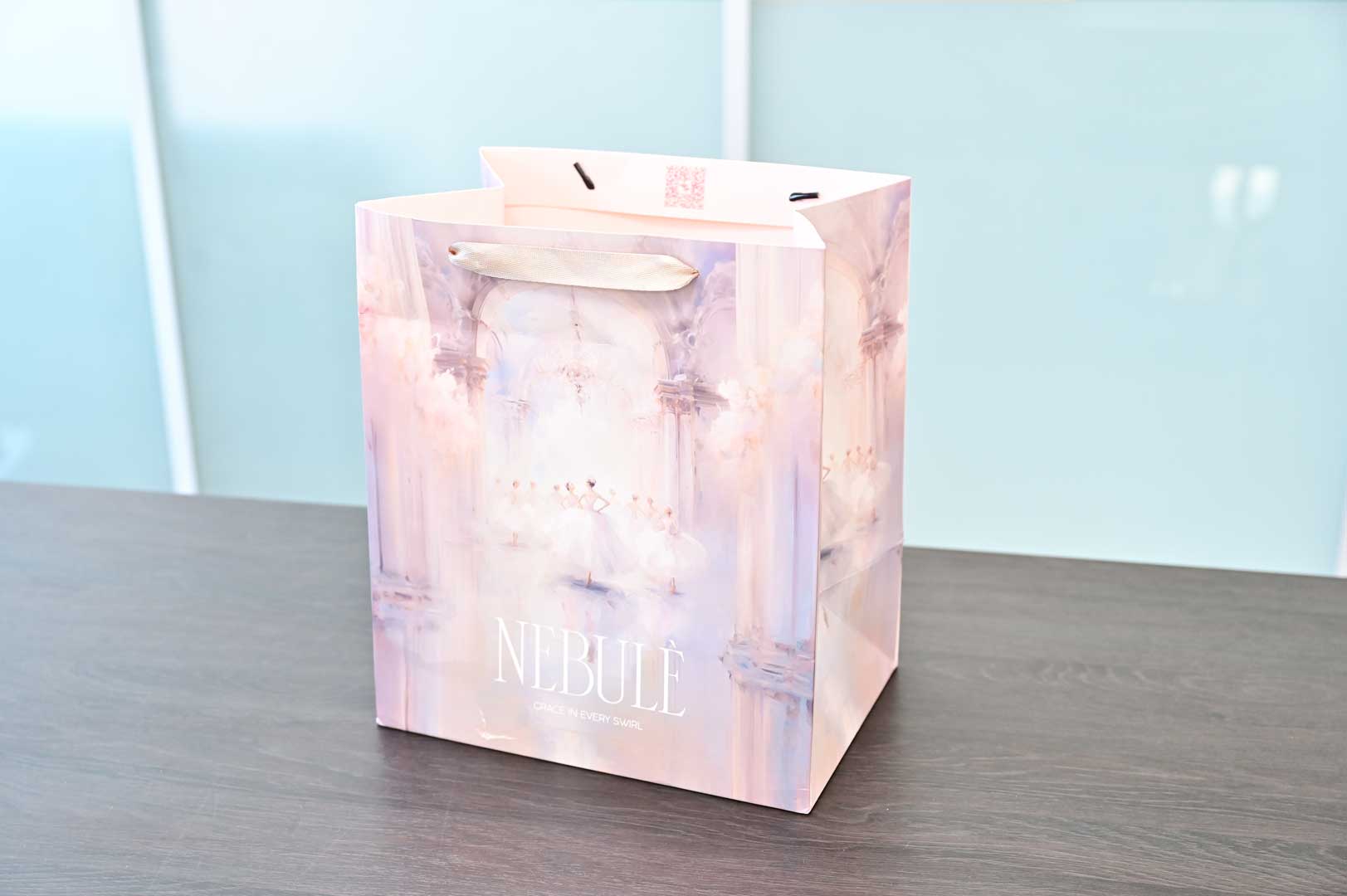
Custom Paper Shopping Bags for Retail
Retail-ready paper shopping bags for daily store operations
Built for apparel, cosmetics, gift, grocery, and specialty retail
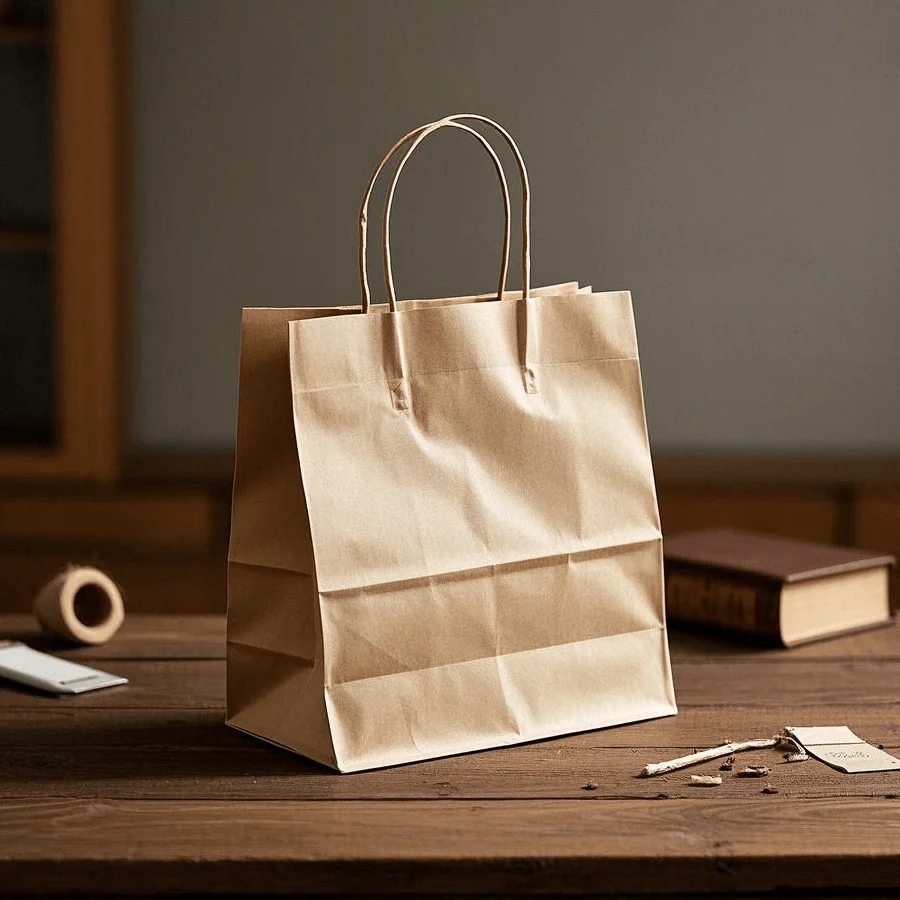
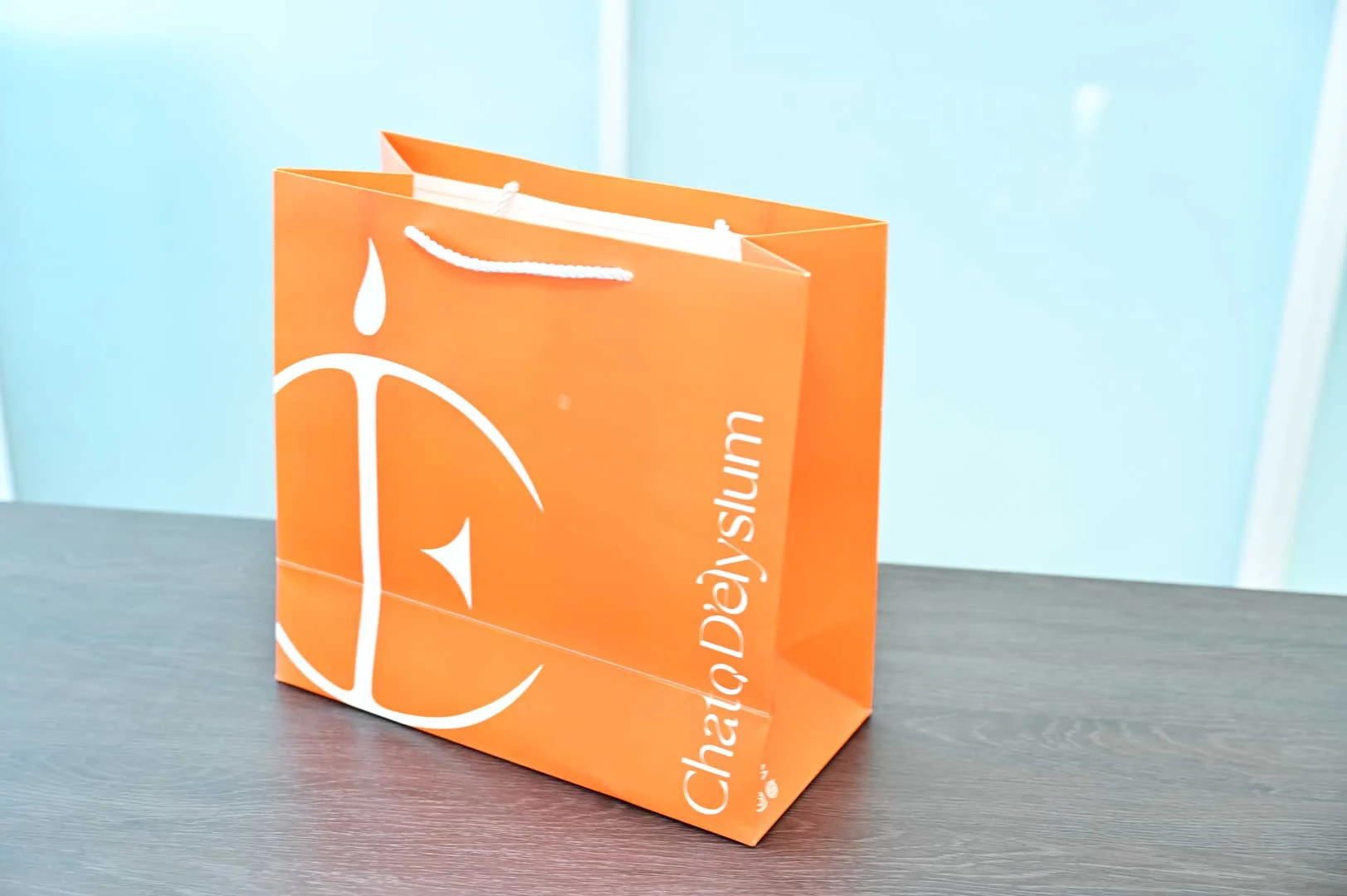
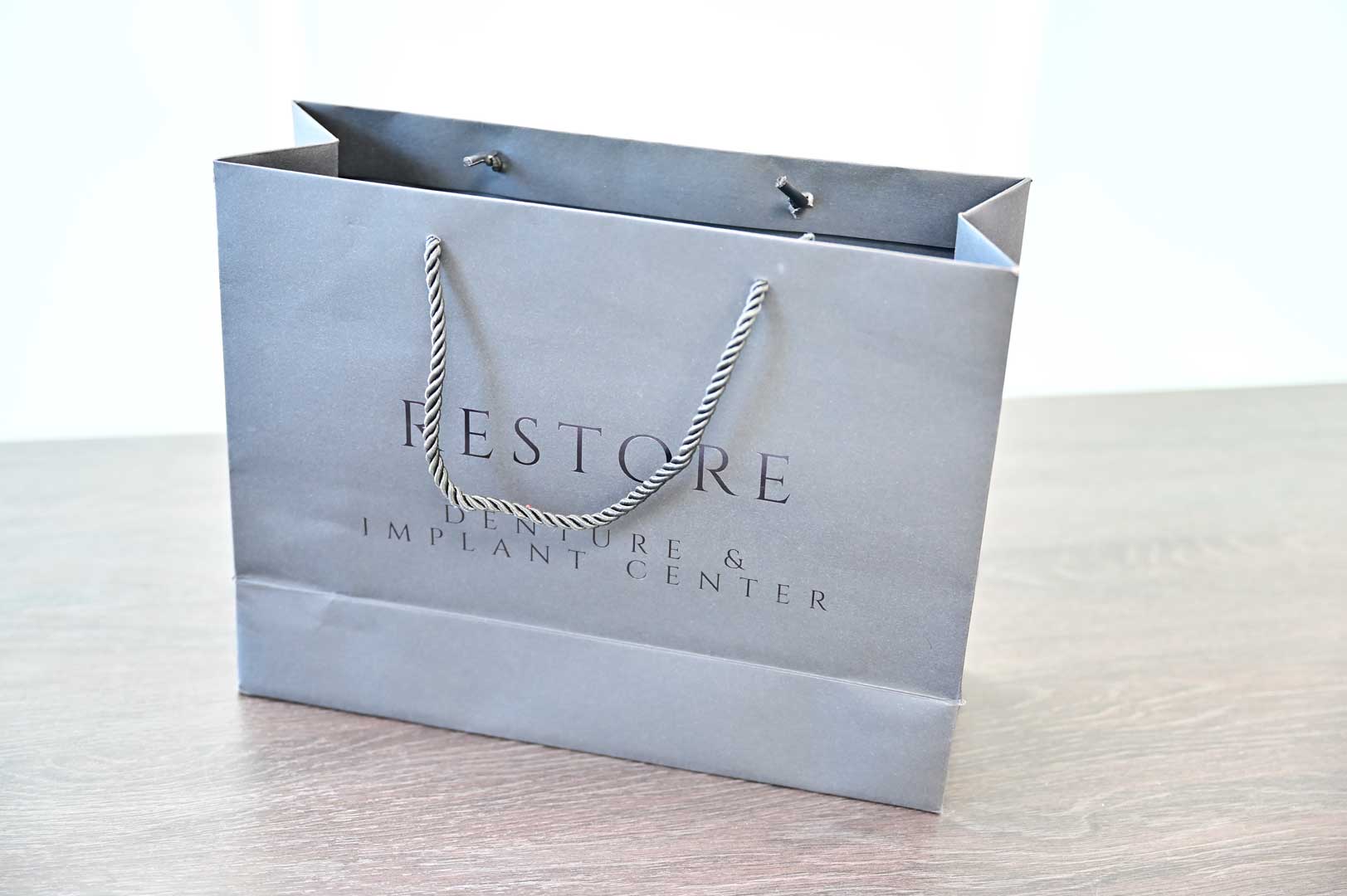
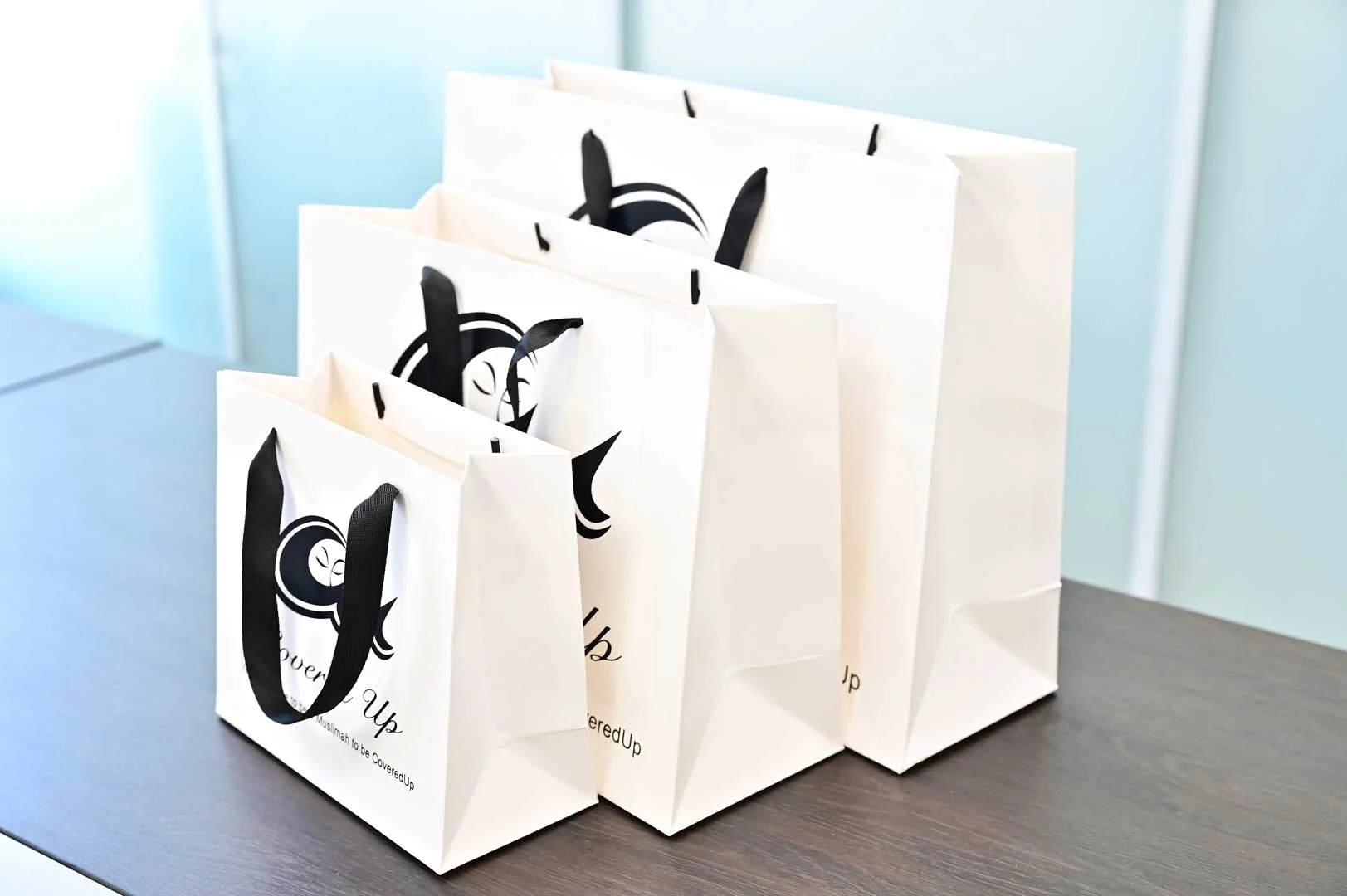
I manufacture custom retail paper shopping bags that are designed for real storefront workflows: fast checkout packing, consistent brand presentation, and reliable carry performance. When you source printed retail paper shopping bags, your decision is rarely just “paper + logo.” It is size fit (W×D×H), paper stock choice (white vs brown kraft), handle type, finishing, and print strategy—all of which determine how the bag performs on the counter and how your branding looks in customers’ hands.
I help you lock a repeatable spec so your reorders stay consistent across seasons, promotions, and multi-store programs.
Quick Specs Overview
Bag size range & measurement guide (W×D×H)
Retail paper bags are typically specified as Width × Depth × Height, and the listed height generally refers to the bag body—not including handles.
I standardize your size set using the same convention so your internal teams (purchasing, merchandising, operations) stay aligned.
Paper stock options (white kraft vs brown kraft)
- Brown kraft delivers a natural, rustic look and is often chosen for eco-forward brand positioning; it can mute bright inks because the base paper color influences the print result.
- White kraft offers a cleaner surface for sharper, more vibrant printing and is usually preferred when color accuracy and vivid graphics matter.
Handle options (twisted paper vs rope)
Many retail programs standardize around twisted paper handles for everyday sales and rope handles for premium presentation.
Printing options (single-side vs double-side)
Double-sided printing is a common requirement for retail branding programs, and mainstream retail bag offerings explicitly support double-sided print on many bag types.
Quick Specs Table
| Spec Item | Standard Options I Support | What It Solves in Retail |
|---|---|---|
| Size format | W×D×H (handles excluded from height) | Reduces size errors and rework |
| Paper stock | White kraft / brown kraft | Controls brand look and print vibrancy |
| Handles | Twisted paper / rope | Aligns with carry comfort and price tier |
| Print sides | Single-side / double-side | Improves visibility in-store and outdoors |
| Finishes | Matte / gloss / protective options | Improves scuff resistance and presentation |
| Reinforcements | Top fold, handle patch, bottom support | Reduces tearing and improves daily-use durability |
RFQ checklist
Size (W×D×H), paper stock, handle, print sides, quantity, destination
If you want an accurate quote without back-and-forth, send me the fields below. I use the same WxDxH sizing language widely used in retail bag specifications, and I keep handle height separate from bag height to avoid production confusion.
Size Selector for Retail Use Cases
Apparel & fashion
I typically recommend a size that fits folded garments without forcing sharp creases and provides a stable gusset for easier packing at checkout.
Cosmetics & personal care
A more compact bag with strong branding placement often performs best—customers reuse it, and your logo stays visible longer.
Gift & seasonal retail
Gift programs benefit from a slightly more structured look (clean folds, premium handles, optional finish) to match the perceived value.
Grocery & convenience
For higher-frequency carry and heavier baskets, I recommend prioritizing paper strength, handle bonding, and reinforcement strategy, then selecting a size that supports fast packing.
Size Selector Table (planning framework)
| Retail Use | What to Prioritize | Bag Structure Focus | Notes |
|---|---|---|---|
| Apparel | Fold-friendly width + clean branding | Moderate gusset | Avoid oversizing that collapses at checkout |
| Cosmetics | Premium look + crisp print | Small/medium gusset | White kraft often helps color vibrancy |
| Gift | Presentation + durability | Structured body + premium handles | Double-side print improves unboxing feel |
| Grocery | Carry strength + reinforcement | Strong gusset + bottom support | Focus on handle selection and bonding |
Paper Material & Strength Selection
Kraft paper basics: how paper choice affects retail durability
Kraft is widely used in retail bags because it balances strength and cost while supporting a broad range of printing methods. Your best outcome comes from matching paper stock + weight + reinforcement to your store reality (average basket weight, distance carried, and reuse).
Basis weight / GSM selection: align weight with store usage
Paper weight is a procurement control knob. Heavier paper generally improves stiffness and carry confidence, but reinforcement and handle bonding often matter just as much. I help you choose a “right-fit” GSM range rather than over-specifying and inflating unit cost.
Reinforcement options
- Top fold reinforcement to stabilize the opening
- Handle patch to reduce tear risk at stress points
- Bottom support for better load distribution and stand-up stability
Handle & Carry Comfort Guide
Twisted paper handles (everyday retail standard)
Twisted paper handles are commonly used in retail kraft bags and are widely offered as a default handle type in standard kraft bag programs.
Rope handles (premium positioning)
Rope handles are commonly positioned as a step-up option for luxury and premium retail bags.
Handle length & usability
I align handle length with how your customers carry: hand carry at checkout versus shoulder carry for longer walks. This reduces complaints and improves reuse—both directly impact brand exposure.
Handle Decision Table
| Handle Type | Best For | Brand Signal | Practical Notes |
|---|---|---|---|
| Twisted paper | Daily retail, fast packing | Clean, classic | Strong default for most stores |
| Rope | Premium retail, gifting | Upscale | Higher perceived value; good comfort |
Printing, Branding & Finish Options
Printing methods: logo-first vs full-color graphics
I match print method to your artwork complexity and the paper stock. The goal is stable reproduction at scale—especially important for multi-store rollouts.
Double-sided printing strategy
A common and effective retail layout is: front = hero logo, back = brand message / social handle / QR (optional). Many standard retail bag programs support double-sided printing, so you can plan your brand system with both sides in mind.
Finish options
Finishes influence how bags look after handling:
- Matte finishes can reduce glare and elevate “premium” perception
- Gloss finishes can make colors feel brighter
- Protective finishes can reduce scuffing in high-traffic retail environments
Printing & Finish Decision Table
| Goal | Recommended Paper Stock | Print Approach | Finish Direction |
|---|---|---|---|
| Vivid brand colors | White kraft | Full-color / color-managed | Matte or gloss based on brand |
| Natural eco look | Brown kraft | Simple logo / darker inks | Often uncoated or light protection |
| High durability | Stock based on budget | Durable placement + reinforcement | Protective finish where needed |
Design Tips That Prevent Rework
Color planning on brown kraft
If your brand relies on saturated, vivid colors, brown kraft can mute those tones because the base paper color influences the final appearance. Mainstream retail bag guidance explicitly recommends white kraft when you want vivid colors.
Artwork file readiness
For clean printing, avoid backgrounds that create unwanted blocks. Retail bag guidelines commonly recommend transparent backgrounds for cleaner edges and a more seamless look.
White ink expectations
If your design needs white ink on brown kraft, confirm feasibility early. Some common paper bag print setups do not offer white ink printing by default.
Retail Operations & Brand Consistency
Store-friendly features
I engineer the bag for operational speed:
- Easy opening and quick product drop-in
- Stackability for storage and checkout efficiency
- Stable gusset behavior so the bag stands better while packing
Reorder consistency
Your long-term cost control comes from consistency. I help you standardize:
- Size set and measurement convention (W×D×H)
- Paper stock and weight range
- Handle spec and reinforcement
- Printing and finish standards for repeat runs
Packaging, Shipping & Delivery Planning
Flat packing and carton labeling for multi-SKU retail programs
Retail programs often run multiple sizes or seasonal versions. I can align packing and carton labeling with your receiving workflow so stores or distribution centers can identify SKUs quickly.
Lead time factors
Lead time is driven by:
- Size count and dielines
- Print sides and finish complexity
- Quantity and batching
- Proof approval speed
MOQ & Lead Time Table (practical expectations)
| Decision Factor | What Changes | What I Advise |
|---|---|---|
| Bag size variety | More SKUs increase setup coordination | Standardize sizes where possible |
| Double-side printing | More print work and approvals | Lock artwork early to protect timeline |
| Paper stock choice | White vs brown affects color planning | Choose stock before finalizing colors |
| Order quantity | Higher volume typically improves unit economics | Build forecast tiers for better pricing |
For reference, online retail bag programs list minimum order quantities starting from small batches (e.g., 25 units for standard kraft paper bags in some offerings), but factory programs are usually optimized when you standardize specs and consolidate volumes.
FAQs About Retail Paper Shopping Bags
How do you measure bag size (W×D×H)?
I measure retail paper bags as Width × Depth × Height (W×D×H). Handle height is treated separately; the bag height typically refers to the main compartment, not including handles.
Can I print on both sides?
Yes. Double-sided printing is a common retail requirement and is widely supported in standard kraft paper bag programs.
Which handle is better: twisted paper or rope?
For everyday retail operations, twisted paper handles are a dependable standard. Rope handles elevate perceived value and are often chosen for premium retail or gifting.
Why do colors look different on brown kraft vs white kraft?
Brown kraft has its own base color that mixes visually with ink, which can mute bright colors. White kraft provides a brighter surface for sharper, more vibrant printing—so it is often preferred for vivid brand colors.
What do you need to quote quickly?
Size (W×D×H), paper stock, handle type, print sides, quantity, and destination are the fastest path to a correct quote and a stable production plan.
Get in Touch
If you want retail paper shopping bags that look consistent across stores and hold up in everyday use, send me your W×D×H size, paper stock preference (white/brown kraft), handle choice, print sides, quantity, and destination country. I will respond with a spec recommendation and a quote structure designed for smooth approvals and repeat reorders.