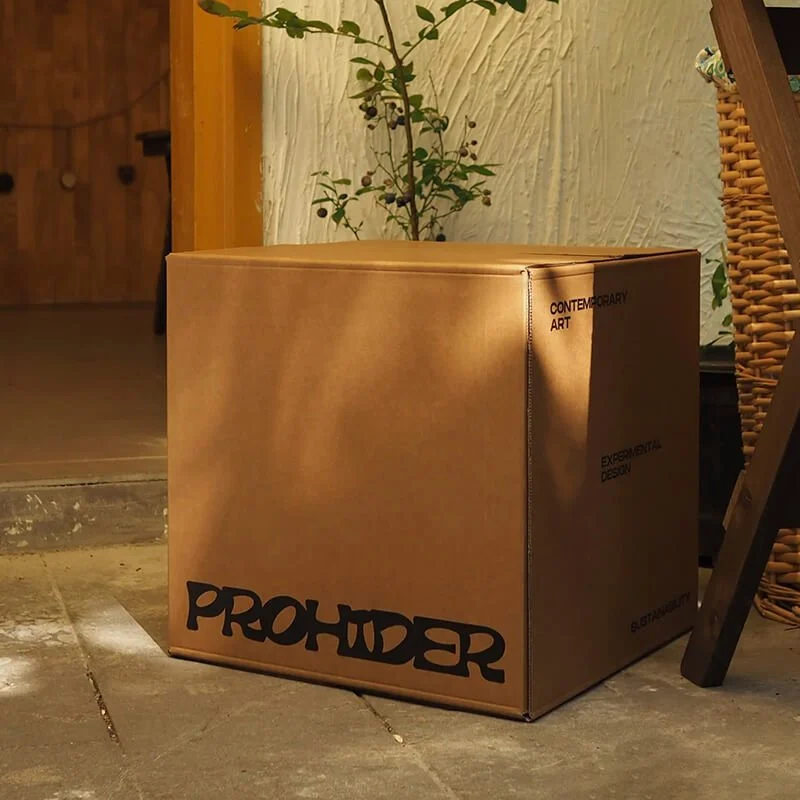
“Types of corrugated boxes” sounds simple, but buyers often mean three different things: the box style (how the box is constructed), the board construction (single wall vs double wall, flute type), and the standard naming system (often FEFCO codes) used to avoid specification errors.
This news guide organizes all three into a practical decision path: start with the use case, shortlist the right box style, then lock the board type that matches your shipping and handling reality—so your RFQ is accurate and your packaging performs as expected.
What “Types of Corrugated Boxes” Actually Means
Box style types
These are structural designs such as RSC, FOL, die-cut mailers, telescoping boxes, folders, and trays. Box style determines assembly time, tape usage, fit, and how the load is supported.
Board types (wall + flute)
These are construction specs like single wall or double wall, and flute profiles like B flute or E flute. Board type drives stacking strength, cushioning, print surface, and cost.
Standard naming (FEFCO)
In B2B sourcing—especially in Europe—buyers use FEFCO codes as a common language for common corrugated designs. This reduces ambiguity when you’re quoting across suppliers and countries.
Quick Match Table: Choose a Corrugated Box by Use Case
Use this as a fast decision tool. Start here, then refine the board type based on weight, shipping route, and stacking risk.
| Use Case | Recommended Box Style | Typical Board Construction | Why This Works |
|---|---|---|---|
| General shipping cartons (most SKUs) | RSC (Regular Slotted Container) | Single wall for standard loads; double wall for heavier loads | Most cost-efficient, scalable, compatible with packing lines |
| Heavy items / stacking pressure | FOL (Full Overlap Slotted) or Telescope | Double wall (sometimes triple for extreme loads) | Overlapping flaps improve edge strength and stacking performance |
| Subscription / DTC branding | Die-cut mailer (self-locking) | E flute or B flute depending on protection needs | Better fit and presentation; faster “unboxing-ready” assembly |
| Fragile products with void control | RSC + fit insert / divider or Die-cut with retention | Single/double wall depending on weight | Controls movement, reduces damage and returns |
| Long or flat products | One-piece folder / five-panel folder | B flute or C flute for rigidity | Wrap-around coverage improves protection for non-box shapes |
| Warehouse picking and display | HSC / Tray | Single wall or double wall for heavier items | Open-top access, easy picking, improves line efficiency |
| Multi-pack kits (components) | Die-cut with partitions or RSC + inserts | E flute/B flute depending on print and strength | Organized compartments, clean pack-out, fewer missing parts |
Core Slotted Box Styles You’ll See Most Often
Slotted containers are the backbone of corrugated shipping. They’re easy to manufacture, easy to tape, and predictable in cost.
RSC (Regular Slotted Container)
The standard shipping carton. All flaps are the same length and meet in the middle when closed.
Best for: general freight, scalable operations, most commodity-to-premium shipping cartons.
Why buyers choose it: low unit cost, quick production, strong supplier availability, compatible with automation.
HSC (Half Slotted Container)
An open-top version of a slotted box (usually shipped with one set of flaps removed).
Best for: trays, in-plant handling, pick-and-pack, display-ready packaging with a lid or overwrap.
Why it matters: improves access speed and reduces assembly time when top closure isn’t required.
FOL (Full Overlap Slotted Container)
The outer flaps overlap fully when closed. This increases board layers on the top/bottom panels.
Best for: heavier items, stacking risk, rough handling routes, export cartons that face compression stress.
Business value: stronger closure panels, improved puncture resistance at the top/bottom.
OSC / Variations of slotted containers
You may see variations where outer flaps do not meet, or where inner flaps provide different closure behavior.
Best for: cost optimization or special pack-out needs.
Procurement note: clarify how the box is sealed and whether it’s designed for taping, stapling, or gluing.
Die-Cut and Self-Erecting Corrugated Boxes
Die-cut corrugated packaging is chosen when fit, presentation, and assembly speed matter more than “standard box economics.”
Die-cut boxes
Cut by tooling (die) to create custom folds, locks, vents, handles, and precise fit.
Best for: premium presentation, complex shapes, products that need tight internal fit, retail-ready programs.
Trade-offs: tooling cost and higher complexity, but often better pack-out efficiency and customer experience.
Mailer-style boxes (self-locking)
Common in subscription and DTC. Often designed to fold and lock without tape (or with minimal tape).
Best for: brand-led programs, influencer kits, small-to-mid sized DTC parcels.
Why buyers choose it: consistent unboxing, better fit, improved branding surface.
When RSC beats die-cut
RSC usually wins when you’re optimizing for scale: high volumes, broad supplier options, low unit cost, and maximum compatibility with automated packaging lines.
Telescoping Boxes, Trays, and Wrap-Around Folders
These styles exist for specific handling realities: large/heavy items, flat or long products, and warehouse operations.
Telescoping boxes (full telescope / partial telescope)
Two-piece design: a lid “telescopes” over the base.
Best for: heavy products, stacking, oversized items, situations where adding layers improves rigidity.
Why it works: double-layered sidewalls can improve edge support.
Trays
Open-top structures used for picking, display, or as inner trays in a shipper.
Best for: fulfillment efficiency, display-ready packaging, multi-unit handling.
Operational value: faster packing and easier access in warehouses.
One-piece folders / five-panel folders
Single-piece corrugated designs that wrap around a product.
Best for: long items, flat items, printed materials, frames, and products that don’t “sit” well in a standard RSC.
Why it matters: reduces void space, improves protection at edges, and improves fit without heavy inserts.
FEFCO Codes: The Standard Language Buyers Use for Corrugated Designs
If you source internationally, especially for European supply chains, FEFCO codes can speed up quoting and reduce misunderstandings. The code families broadly map to design groups (for example, slotted containers, telescoping designs, folders, and slide-type constructions).
How to use FEFCO in practice
- Use the FEFCO code to anchor the design type.
- Confirm dimensions and orientation (internal vs external).
- Specify board construction (wall + flute).
- Add functional requirements (printing, hand holes, partitions, tape/glue method).
Procurement benefit: when you send a clear “design language + dimensions + board spec,” your quotes come back comparable and your sampling cycle shortens.
Flute and Wall Types: How Board Construction Changes Performance
Box style tells you “what the box is.” Board construction tells you “how it performs.”
Wall types (by number of layers)
- Single wall: common for standard shipping cartons and lightweight-to-midweight products.
- Double wall: stronger for heavier items, higher stacking, longer routes, and higher damage risk.
- Triple wall: used for very heavy loads or industrial/export cases when compression strength requirements are high.
Flute types (by profile)
Flutes affect thickness, cushioning, rigidity, and print surface.
| Flute Type | Typical Strength/Cushioning Profile | Common Uses |
|---|---|---|
| A flute | thicker, higher cushioning | fragile items, more shock absorption needs |
| C flute | balanced cushioning and stacking | general shipping cartons |
| B flute | good puncture resistance, strong stacking for its thickness | many shipping cartons, retail-ready outers |
| E flute | thinner, smoother print surface | mailers, premium print needs, smaller boxes |
| F flute | very thin, high-quality print surface | small retail packaging, lightweight protection needs |
Buyer decision rule
- If your risk is stacking/compression, prioritize stronger board (often double wall) and appropriate flute choice.
- If your risk is impact/shock, prioritize cushioning behavior and fit control (sometimes inserts matter more than upgrading board).
- If your priority is brand presentation, consider thinner flutes with better print surface (often E flute) while still meeting strength requirements.
RFQ Checklist: What to Specify to Get Accurate Quotes
Corrugated quotes go off-track when specs are incomplete. Use this RFQ framework to standardize supplier responses and reduce sampling rework.
| RFQ Field | What to Provide | Why It Matters |
|---|---|---|
| Box style | RSC / FOL / Die-cut mailer / Telescope / Folder / Tray | Locks the structural design and tooling path |
| Dimensions | Internal L × W × H (and orientation) | Prevents fit errors and wrong quoting basis |
| Board construction | Single/double/triple wall + flute type | Determines strength, cost, and performance |
| Strength target | Your internal standard or performance requirement | Aligns suppliers to a consistent quality baseline |
| Closure method | Tape, glue, self-lock, staples (if used) | Affects assembly time and reliability |
| Printing | None / 1-color / full print / inside-outside | Impacts lead time and cost |
| Pack-out | Inserts, dividers, partitions, void fill approach | Controls product movement and damage risk |
| Shipping route | DTC parcel / pallet freight / export | Determines risk profile and board choice |
| Quantity and timeline | Trial volume + reorder expectation | Drives unit economics and feasibility |
FAQs: Types of Corrugated Boxes
What is the most common corrugated box type?
The most common is the RSC (Regular Slotted Container) because it is cost-effective, easy to seal, and widely supported by suppliers and automated packing operations.
When should I choose FOL over RSC?
Choose FOL when you need stronger top/bottom panels due to stacking pressure, heavier products, or higher puncture risk. The full overlap adds material strength where the carton often fails first.
What’s the difference between die-cut boxes and standard shipping cartons?
Die-cut boxes offer better fit and custom features (locks, handles, retention), but require tooling and can cost more. Standard cartons like RSC are optimized for scale and unit cost.
When do I need double wall corrugated?
Double wall is typically selected when product weight is higher, stacking risk increases, routes are rougher, or damage cost is high enough that performance matters more than marginal packaging cost.
Is a mailer box always better for eCommerce?
Not always. Mailers are excellent for presentation and faster assembly, but the best choice depends on product fragility, size, and whether you need a secondary shipper.
What do flute types actually change?
Flute types affect thickness, cushioning, rigidity, and print surface. Thicker flutes often cushion better; thinner flutes often print better; the right choice depends on your risk profile.
What are FEFCO codes used for?
FEFCO codes are a standardized way to reference corrugated designs in RFQs and specifications, reducing miscommunication between buyers and suppliers—especially across regions.
How do I reduce damage without overbuilding the box?
Start by controlling product movement (fit, partitions, inserts). Then choose the smallest board upgrade that matches the real risk (stacking, drop, puncture). This typically lowers total cost versus “always upgrading board.”
Should I specify internal or external dimensions?
For product fit and inserts, specify internal dimensions. If your carton must fit a shelf, shipper, or master case pattern, also specify external constraints as needed.
Closing: A Practical Way to Select the Right Corrugated Box Type
A high-performing corrugated program is built on clear decisions, not guesswork:
- Pick the box style that matches your packing workflow and customer experience goals.
- Lock the board construction that matches your shipping route and damage risk.
- Standardize your RFQ inputs so supplier quotes are comparable and sampling cycles stay tight.
If you want your sourcing cycle to move faster, use the RFQ checklist above and align every supplier to the same spec fields. That’s how you reduce revisions, control total packaging cost, and protect your product reputation in transit.
“Types of corrugated boxes” sounds simple, but buyers often mean three different things: the box style (how the box is constructed), the board construction (single wall vs double wall, flute type), and the standard naming system (often FEFCO codes) used to avoid specification errors.
This news guide organizes all three into a practical decision path: start with the use case, shortlist the right box style, then lock the board type that matches your shipping and handling reality—so your RFQ is accurate and your packaging performs as expected.
What “Types of Corrugated Boxes” Actually Means
Box style types
These are structural designs such as RSC, FOL, die-cut mailers, telescoping boxes, folders, and trays. Box style determines assembly time, tape usage, fit, and how the load is supported.
Board types (wall + flute)
These are construction specs like single wall or double wall, and flute profiles like B flute or E flute. Board type drives stacking strength, cushioning, print surface, and cost.
Standard naming (FEFCO)
In B2B sourcing—especially in Europe—buyers use FEFCO codes as a common language for common corrugated designs. This reduces ambiguity when you’re quoting across suppliers and countries.
Quick Match Table: Choose a Corrugated Box by Use Case
Use this as a fast decision tool. Start here, then refine the board type based on weight, shipping route, and stacking risk.
| Use Case | Recommended Box Style | Typical Board Construction | Why This Works |
|---|---|---|---|
| General shipping cartons (most SKUs) | RSC (Regular Slotted Container) | Single wall for standard loads; double wall for heavier loads | Most cost-efficient, scalable, compatible with packing lines |
| Heavy items / stacking pressure | FOL (Full Overlap Slotted) or Telescope | Double wall (sometimes triple for extreme loads) | Overlapping flaps improve edge strength and stacking performance |
| Subscription / DTC branding | Die-cut mailer (self-locking) | E flute or B flute depending on protection needs | Better fit and presentation; faster “unboxing-ready” assembly |
| Fragile products with void control | RSC + fit insert / divider or Die-cut with retention | Single/double wall depending on weight | Controls movement, reduces damage and returns |
| Long or flat products | One-piece folder / five-panel folder | B flute or C flute for rigidity | Wrap-around coverage improves protection for non-box shapes |
| Warehouse picking and display | HSC / Tray | Single wall or double wall for heavier items | Open-top access, easy picking, improves line efficiency |
| Multi-pack kits (components) | Die-cut with partitions or RSC + inserts | E flute/B flute depending on print and strength | Organized compartments, clean pack-out, fewer missing parts |
Core Slotted Box Styles You’ll See Most Often
Slotted containers are the backbone of corrugated shipping. They’re easy to manufacture, easy to tape, and predictable in cost.
RSC (Regular Slotted Container)
The standard shipping carton. All flaps are the same length and meet in the middle when closed.
Best for: general freight, scalable operations, most commodity-to-premium shipping cartons.
Why buyers choose it: low unit cost, quick production, strong supplier availability, compatible with automation.
HSC (Half Slotted Container)
An open-top version of a slotted box (usually shipped with one set of flaps removed).
Best for: trays, in-plant handling, pick-and-pack, display-ready packaging with a lid or overwrap.
Why it matters: improves access speed and reduces assembly time when top closure isn’t required.
FOL (Full Overlap Slotted Container)
The outer flaps overlap fully when closed. This increases board layers on the top/bottom panels.
Best for: heavier items, stacking risk, rough handling routes, export cartons that face compression stress.
Business value: stronger closure panels, improved puncture resistance at the top/bottom.
OSC / Variations of slotted containers
You may see variations where outer flaps do not meet, or where inner flaps provide different closure behavior.
Best for: cost optimization or special pack-out needs.
Procurement note: clarify how the box is sealed and whether it’s designed for taping, stapling, or gluing.
Die-Cut and Self-Erecting Corrugated Boxes
Die-cut corrugated packaging is chosen when fit, presentation, and assembly speed matter more than “standard box economics.”
Die-cut boxes
Cut by tooling (die) to create custom folds, locks, vents, handles, and precise fit.
Best for: premium presentation, complex shapes, products that need tight internal fit, retail-ready programs.
Trade-offs: tooling cost and higher complexity, but often better pack-out efficiency and customer experience.
Mailer-style boxes (self-locking)
Common in subscription and DTC. Often designed to fold and lock without tape (or with minimal tape).
Best for: brand-led programs, influencer kits, small-to-mid sized DTC parcels.
Why buyers choose it: consistent unboxing, better fit, improved branding surface.
When RSC beats die-cut
RSC usually wins when you’re optimizing for scale: high volumes, broad supplier options, low unit cost, and maximum compatibility with automated packaging lines.
Telescoping Boxes, Trays, and Wrap-Around Folders
These styles exist for specific handling realities: large/heavy items, flat or long products, and warehouse operations.
Telescoping boxes (full telescope / partial telescope)
Two-piece design: a lid “telescopes” over the base.
Best for: heavy products, stacking, oversized items, situations where adding layers improves rigidity.
Why it works: double-layered sidewalls can improve edge support.
Trays
Open-top structures used for picking, display, or as inner trays in a shipper.
Best for: fulfillment efficiency, display-ready packaging, multi-unit handling.
Operational value: faster packing and easier access in warehouses.
One-piece folders / five-panel folders
Single-piece corrugated designs that wrap around a product.
Best for: long items, flat items, printed materials, frames, and products that don’t “sit” well in a standard RSC.
Why it matters: reduces void space, improves protection at edges, and improves fit without heavy inserts.
FEFCO Codes: The Standard Language Buyers Use for Corrugated Designs
If you source internationally, especially for European supply chains, FEFCO codes can speed up quoting and reduce misunderstandings. The code families broadly map to design groups (for example, slotted containers, telescoping designs, folders, and slide-type constructions).
How to use FEFCO in practice
- Use the FEFCO code to anchor the design type.
- Confirm dimensions and orientation (internal vs external).
- Specify board construction (wall + flute).
- Add functional requirements (printing, hand holes, partitions, tape/glue method).
Procurement benefit: when you send a clear “design language + dimensions + board spec,” your quotes come back comparable and your sampling cycle shortens.
Flute and Wall Types: How Board Construction Changes Performance
Box style tells you “what the box is.” Board construction tells you “how it performs.”
Wall types (by number of layers)
- Single wall: common for standard shipping cartons and lightweight-to-midweight products.
- Double wall: stronger for heavier items, higher stacking, longer routes, and higher damage risk.
- Triple wall: used for very heavy loads or industrial/export cases when compression strength requirements are high.
Flute types (by profile)
Flutes affect thickness, cushioning, rigidity, and print surface.
| Flute Type | Typical Strength/Cushioning Profile | Common Uses |
|---|---|---|
| A flute | thicker, higher cushioning | fragile items, more shock absorption needs |
| C flute | balanced cushioning and stacking | general shipping cartons |
| B flute | good puncture resistance, strong stacking for its thickness | many shipping cartons, retail-ready outers |
| E flute | thinner, smoother print surface | mailers, premium print needs, smaller boxes |
| F flute | very thin, high-quality print surface | small retail packaging, lightweight protection needs |
Buyer decision rule
- If your risk is stacking/compression, prioritize stronger board (often double wall) and appropriate flute choice.
- If your risk is impact/shock, prioritize cushioning behavior and fit control (sometimes inserts matter more than upgrading board).
- If your priority is brand presentation, consider thinner flutes with better print surface (often E flute) while still meeting strength requirements.
RFQ Checklist: What to Specify to Get Accurate Quotes
Corrugated quotes go off-track when specs are incomplete. Use this RFQ framework to standardize supplier responses and reduce sampling rework.
| RFQ Field | What to Provide | Why It Matters |
|---|---|---|
| Box style | RSC / FOL / Die-cut mailer / Telescope / Folder / Tray | Locks the structural design and tooling path |
| Dimensions | Internal L × W × H (and orientation) | Prevents fit errors and wrong quoting basis |
| Board construction | Single/double/triple wall + flute type | Determines strength, cost, and performance |
| Strength target | Your internal standard or performance requirement | Aligns suppliers to a consistent quality baseline |
| Closure method | Tape, glue, self-lock, staples (if used) | Affects assembly time and reliability |
| Printing | None / 1-color / full print / inside-outside | Impacts lead time and cost |
| Pack-out | Inserts, dividers, partitions, void fill approach | Controls product movement and damage risk |
| Shipping route | DTC parcel / pallet freight / export | Determines risk profile and board choice |
| Quantity and timeline | Trial volume + reorder expectation | Drives unit economics and feasibility |
FAQs: Types of Corrugated Boxes
What is the most common corrugated box type?
The most common is the RSC (Regular Slotted Container) because it is cost-effective, easy to seal, and widely supported by suppliers and automated packing operations.
When should I choose FOL over RSC?
Choose FOL when you need stronger top/bottom panels due to stacking pressure, heavier products, or higher puncture risk. The full overlap adds material strength where the carton often fails first.
What’s the difference between die-cut boxes and standard shipping cartons?
Die-cut boxes offer better fit and custom features (locks, handles, retention), but require tooling and can cost more. Standard cartons like RSC are optimized for scale and unit cost.
When do I need double wall corrugated?
Double wall is typically selected when product weight is higher, stacking risk increases, routes are rougher, or damage cost is high enough that performance matters more than marginal packaging cost.
Is a mailer box always better for eCommerce?
Not always. Mailers are excellent for presentation and faster assembly, but the best choice depends on product fragility, size, and whether you need a secondary shipper.
What do flute types actually change?
Flute types affect thickness, cushioning, rigidity, and print surface. Thicker flutes often cushion better; thinner flutes often print better; the right choice depends on your risk profile.
What are FEFCO codes used for?
FEFCO codes are a standardized way to reference corrugated designs in RFQs and specifications, reducing miscommunication between buyers and suppliers—especially across regions.
How do I reduce damage without overbuilding the box?
Start by controlling product movement (fit, partitions, inserts). Then choose the smallest board upgrade that matches the real risk (stacking, drop, puncture). This typically lowers total cost versus “always upgrading board.”
Should I specify internal or external dimensions?
For product fit and inserts, specify internal dimensions. If your carton must fit a shelf, shipper, or master case pattern, also specify external constraints as needed.
Closing: A Practical Way to Select the Right Corrugated Box Type
A high-performing corrugated program is built on clear decisions, not guesswork:
- Pick the box style that matches your packing workflow and customer experience goals.
- Lock the board construction that matches your shipping route and damage risk.
- Standardize your RFQ inputs so supplier quotes are comparable and sampling cycles stay tight.
If you want your sourcing cycle to move faster, use the RFQ checklist above and align every supplier to the same spec fields. That’s how you reduce revisions, control total packaging cost, and protect your product reputation in transit.